Yoga Ball for Pregnancy: Exercises, Sizes, Safety 2026
A yoga ball for pregnancy is one of the most practical and research-supported tools available for managing discomfort, preparing the pelvis for labor, and maintaining core stability as your body changes across all three trimesters. Used correctly and safely, it addresses lower back pain, pelvic pressure, fetal positioning, and labor preparation in ways that no other single piece of equipment matches.
The American College of Obstetricians and Gynecologists (ACOG) recommends that healthy pregnant women engage in moderate-intensity physical activity for at least 150 minutes per week throughout pregnancy. Yoga ball exercises contribute meaningfully to that goal while accommodating the shifting center of gravity and joint laxity that make conventional exercise increasingly uncomfortable.
This guide covers everything with real specificity: how to choose the right size, which exercises are appropriate by trimester, how the ball supports labor and birth, how to address common pregnancy conditions, and who should modify or avoid ball use.
What Is a Yoga Ball for Pregnancy and Why Use One
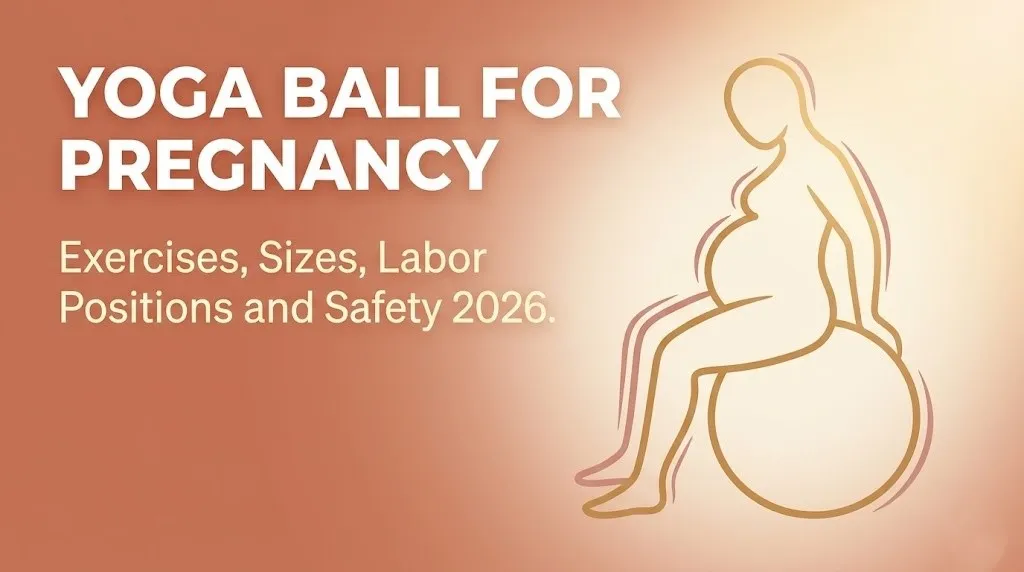
A yoga ball for pregnancy, also called a birth ball or Swiss ball, is a large inflatable exercise ball that provides an unstable seating surface, prompting the pelvic floor, deep core muscles, and hip stabilizers to engage continuously during sitting and movement. This passive activation is one of the primary reasons it outperforms a standard chair during pregnancy.
The unstable surface works like a constant, gentle proprioceptive challenge. Your body must make micro-adjustments to stay balanced. Those micro-adjustments recruit the transversus abdominis and multifidus, two of the most important muscles for lumbar spine stability. During pregnancy, as the lumbar lordosis increases with the growing belly, these muscles are under continuous demand and often underprepared.
Sitting upright on a yoga ball automatically encourages an anterior pelvic tilt in the neutral range, which opens the pelvic inlet. This positioning supports the baby moving into an optimal head-down position as the due date approaches. Think of it like tilting a bowl: the heaviest contents naturally settle to the lowest point.
Key reasons to use a yoga ball during pregnancy:
- Lumbar decompression: Seated movement reduces compressive load on the lumbar discs
- Pelvic floor activation: Unstable surface engages supporting muscles continuously
- Fetal positioning support: Gravity encourages anterior positioning of baby’s head
- Hip mobility: Circular and figure-eight movements maintain hip joint range of motion
- Labor preparation: Rhythmic movement mirrors early labor coping techniques used by midwives and doulas
- Swelling reduction: Gentle movement on the ball encourages venous return from the lower limbs
Birth Ball vs Yoga Ball: Is There a Real Difference
A birth ball and a yoga ball are the same physical object. The difference is entirely in how they are marketed and where they are used. Both are large inflatable exercise balls (also called Swiss balls or stability balls) made from burst-resistant PVC or rubber.
The term “birth ball” came from midwifery practice, where labor and delivery nurses and doulas introduced the ball as a labor support tool in hospital and birth center settings. “Yoga ball” is the fitness industry’s term. “Swiss ball” or “stability ball” is the physical therapy term. They refer to the same product type.
| Term | Origin | Setting | Functional Difference |
|---|---|---|---|
| Birth ball | Midwifery practice | Labor ward, birth center | None; marketing distinction only |
| Yoga ball | Fitness industry | Home, studio | None; same product type |
| Swiss ball | Physical therapy | Clinic, gym | None; same product type |
| Stability ball | Physical therapy / gym | Clinic, gym | None; same product type |
What does matter is quality. Look for:
- Anti-burst rating: Should withstand at least 300 lbs before deflating slowly rather than popping
- Non-slip surface texture: Smooth balls are more dangerous on hard floors during pregnancy
- BPA-free materials: Particularly relevant during pregnancy
- Weight capacity clearly stated: Confirm it exceeds your current pregnancy weight by a comfortable margin
Avoid buying the cheapest available option. A ball that deflates suddenly during pregnancy is a fall risk. Investing in a quality anti-burst ball rated for your weight is a practical safety decision, not an upgrade.
What Size Yoga Ball for Pregnancy Do You Need
The correct yoga ball size for pregnancy is determined primarily by your height, with the goal of positioning your hips level with or very slightly above your knees when seated. This alignment keeps the sacroiliac joints neutral and the pelvic floor in an appropriately loaded position.
| Your Height | Recommended Ball Diameter | Seated Hip Position |
|---|---|---|
| Under 5’0″ | 45 cm | Hips at or above knee level |
| 5’0″ to 5’5″ | 55 cm | Hips at or slightly above knees |
| 5’5″ to 5’11” | 65 cm | Hips at or slightly above knees |
| 5’11” and above | 75 cm | Hips at or slightly above knees |
Inflation level affects size and stability. A firmer ball (inflated fully) is less forgiving and more challenging for balance. A slightly deflated ball feels more stable and is often more comfortable in the third trimester, when balance is affected by the shifted center of gravity.
Yoga teachers and midwives generally recommend inflating the ball to about 90% of its maximum recommended firmness during late pregnancy. This gives enough support without the rigidity that can make seated movement less fluid.
A quick at-home test: sit on the ball and check your knee angle. Your thighs should be slightly angled downward from hip to knee. If your knees are higher than your hips, the ball is too small. If your hips are much higher than your knees and you feel like you could slide off, the ball is too large or over-inflated.
Key Takeaway: A birth ball and yoga ball are identical products; what matters is the anti-burst rating, your height-appropriate size, and 90% inflation for maximum pregnancy comfort and safety.
How to Use a Yoga Ball During Pregnancy Safely
Using a yoga ball during pregnancy safely requires placing it on a non-slip surface, maintaining postural awareness, and starting all movement slowly to avoid losing balance as your center of gravity shifts with your growing belly.
The most important safety setup is the floor surface. Place the ball on a yoga mat, rubber mat, or carpet rather than bare hardwood or tile. Smooth floors combined with a smooth ball surface create real fall risk, particularly in the third trimester when balance is already compromised.
To set up and begin using your yoga ball safely:
- Place the ball on a non-slip mat. Push it against a wall for your first sessions.
- Sit at the edge of a sturdy chair. Roll slowly onto the ball from a seated position.
- Place both feet flat on the floor, hip-width apart. Confirm your hips are level with or above your knees.
- Sit tall through the crown of your head. Allow the natural curve of your lumbar spine.
- Take 5 slow breaths to establish stability before beginning any movement.
- Start with small movements: gentle weight shifts left and right, then forward and back.
- Increase movement range only when you feel fully stable.
General safety guidelines for all trimesters:
- Never use the ball alone in your first several sessions. Have a partner nearby.
- Avoid the ball on wet floors or in small spaces where you cannot fall safely.
- Stop immediately if you feel dizziness, pelvic pressure that increases suddenly, or any sharp pain.
- Limit sessions to 20 to 30 minutes of active ball exercises in early-to-mid pregnancy. Shorter sessions are fine.
Yoga Ball Exercises for Pregnancy: The Best Moves
The most effective yoga ball exercises for pregnancy address the four most common physical challenges: lower back pain, pelvic instability, reduced hip mobility, and the need to encourage optimal fetal positioning. The exercises below cover all four.
| Exercise | Primary Benefit | Trimester Suitability | Caution |
|---|---|---|---|
| Seated pelvic tilts | Lumbar decompression | All trimesters | Reduce range in third trimester |
| Hip circles | Pelvic mobility, fetal positioning | All trimesters | Slow circles only; avoid if SPD |
| Figure-eight movement | Pelvic floor engagement, hip flexibility | All trimesters | Avoid if SPD flares |
| Forward lean over ball | Back pain relief, baby positioning | Second and third trimester | Use non-slip mat under ball |
| Wall squat with ball | Glute and quad strength | First and second trimester | Avoid deep squat with pelvic pain |
| Cat-Cow over ball | Spinal mobility, back relief | All trimesters | Small range of motion |
| Side-lying leg lift with ball | Hip abductor strengthening | All trimesters | Fully supported side-lying only |
According to the American College of Sports Medicine (ACSM), pregnant women benefit from exercises that maintain core stability without creating excessive intra-abdominal pressure. Yoga ball exercises in seated and supported positions meet this criterion consistently across all three trimesters.
Modification: For any exercise causing pelvic discomfort, reduce the range of motion to 50% and stop if symptoms increase. A physiotherapist with prenatal experience can assess whether the specific exercise or your technique needs adjustment.
Yoga Ball in the First Trimester: What Is Safe
In the first trimester, yoga ball use is generally safe for healthy pregnant women and focuses primarily on maintaining core stability, managing early postural changes, and building familiarity with the ball before the body’s center of gravity shifts more dramatically later in pregnancy.
Fatigue and nausea are common in the first trimester. Many women find that sitting on the ball and doing very gentle movement is actually more comfortable during nausea episodes than lying down, because the upright position reduces gastric pressure.
First trimester yoga ball priorities:
- Learning to sit on the ball correctly without leaning forward or rounding the lower back
- Gentle seated weight shifts to begin activating the deep stabilizers
- Slow hip circles to maintain hip joint mobility before the pubic symphysis begins loosening
- Cat-Cow (Marjaryasana-Bitilasana) against the wall with hands on ball: A gentler alternative to floor-based Cat-Cow for anyone experiencing morning sickness or dizziness
The National Center for Complementary and Integrative Health (NCCIH) notes that gentle exercise including yoga-based movement is generally safe in the first trimester for women with uncomplicated pregnancies. Women with a history of recurrent miscarriage, subchorionic hematoma, or threatened miscarriage should confirm exercise clearance with their obstetric provider before beginning any new physical activity.
Pose Tip:
- In the first trimester, prioritize short sessions of 10 to 15 minutes daily over longer, less frequent ones.
- Keep a chair within arm’s reach for the first several sessions while you build balance confidence.
- If nausea is severe, rest in a supported semi-recline rather than forcing ball exercises.
Yoga Ball in the Second Trimester: What to Focus On
The second trimester is the optimal time to build a consistent yoga ball practice because energy levels typically return, the belly is not yet large enough to interfere with most positions, and the physical demands of the third trimester make early preparation worthwhile.
Most pregnant women experience the second trimester’s characteristic anterior weight shift between weeks 16 and 22. The growing uterus begins to pull the pelvis forward, increasing lumbar lordosis and placing greater demand on the erector spinae and quadratus lumborum. Yoga ball exercises that reinforce neutral spine alignment become especially relevant at this stage.
Second trimester yoga ball focus areas:
- Sustained seated posture practice: Using the ball as your primary sitting surface for 20 to 30 minute intervals while working or reading
- Pelvic tilts: Reinforcing neutral lumbar curve against the growing anterior pull
- Supported squats with ball against wall: Building glute and quad strength for the increased postural load
- Hip circles and figure-eight movements: Maintaining pelvic mobility as the relaxin hormone begins softening ligamentous tissue
- Forward leaning positions over the ball: Encouraging the baby to move into an anterior position while relieving lumbar pressure
Modification: If round ligament pain (a sharp pulling sensation in the lower abdomen or groin) occurs during exercise, slow your movements significantly. Round ligament pain typically appears with sudden position changes. Moving slowly and deliberately on the ball almost always prevents it from triggering.
Key Takeaway: The second trimester is the ideal time to build a yoga ball habit, because energy is higher, the belly accommodates most positions, and the postural changes that cause late-pregnancy discomfort are just beginning.
Yoga Ball in the Third Trimester: Preparing Your Body
The third trimester yoga ball focus shifts from general fitness to birth preparation, with exercises targeting pelvic mobility, perineal softening, optimal fetal positioning, and labor coping skill development. This is when the ball becomes most specifically functional.
From approximately week 32 onward, the baby’s head typically begins descending into the pelvic inlet in preparation for birth. Ball exercises that encourage the baby into an occiput anterior position (head down, facing your back) become relevant. The ball facilitates this through gravity-assisted anterior tilt of the pelvis.
Third trimester yoga ball priorities:
- Seated forward lean: Lean over the ball with knees wide, belly dropping between thighs. This encourages anterior positioning.
- Hip circles and figure-eight movements: Maintain pelvic mobility and prepare the joint for the demands of labor.
- Slow bouncing: Gentle rhythmic movement that mimics early labor coping movements used in midwifery-supported births.
- **Supported *Malasana (Garland Pose / Squat)* with ball behind for support:** Opens the pelvic outlet as the due date approaches.
A 2017 study published in the Journal of Midwifery and Women’s Health found that women who used birthing balls during the active phase of labor reported lower pain scores and shorter first-stage labor duration compared to women who did not use them. The preparation that begins in the third trimester contributes directly to this benefit.
Avoid deep unsupported squats after 36 weeks without midwifery clearance, particularly if the baby is not yet fully engaged.
Yoga Ball Pelvic Floor Exercises During Pregnancy
Yoga ball pelvic floor exercises during pregnancy engage the levator ani, coccygeus, and deep transversus abdominis through the unstable sitting surface combined with specific coordinated contractions, making them more functionally effective than supine Kegel exercises alone.
The pelvic floor is a hammock-shaped group of muscles spanning the base of the pelvis. During pregnancy, the increasing weight of the uterus, placenta, and baby places continuous downward load on these muscles. Maintaining their strength and coordination supports bladder control, reduces pelvic organ prolapse risk, and aids in controlled pushing during labor.
To practice pelvic floor activation on the yoga ball:
- Sit centered on the ball. Feet flat, hip-width apart. Spine tall.
- Take 3 slow, diaphragmatic breaths to release any holding in the pelvic floor.
- On an inhale, let the pelvic floor soften and drop gently.
- On an exhale, gently contract the pelvic floor upward, as if lifting a blueberry internally.
- Hold the contraction for 5 counts. Keep breathing. Do not hold your breath.
- Release slowly on the next inhale. Rest for 5 counts.
- Repeat 8 to 10 times. Complete 2 sets per session.
According to research published in the Journal of Obstetric Gynecologic and Neonatal Nursing, pelvic floor muscle training during pregnancy reduces the risk of urinary incontinence in the third trimester and postpartum period. Practicing on an unstable surface like a yoga ball increases neuromuscular demand compared to supine practice.
Modification: If contractions are difficult to identify, a women’s health physiotherapist can provide biofeedback-guided pelvic floor assessment and teach the correct activation pattern before independent practice.
Yoga Ball Hip Circles: How to Do Them and Why They Help
Yoga ball hip circles are gentle, continuous circular movements of the pelvis performed while seated on the ball, designed to maintain hip joint mobility, release tension in the piriformis and hip rotator muscles, and encourage the baby into an optimal position through rhythmic pelvic movement.
Hip circles are one of the most universally recommended yoga ball movements across midwifery, prenatal yoga, and physical therapy settings. They are accessible in all three trimesters, require no specific fitness level, and can be practiced for as little as 2 to 5 minutes to produce noticeable relief from pelvic and hip discomfort.
To practice yoga ball hip circles:
- Sit centered on the ball. Feet flat, slightly wider than hip-width for third trimester stability.
- Place hands on your knees or thighs for light guidance.
- Begin moving your hips in a slow circle to the right. Lead from the pelvis, not the upper body.
- Make 8 complete circles clockwise. Keep the movement smooth and continuous.
- Pause. Reverse direction. 8 complete circles counterclockwise.
- Progress to a figure-eight movement: shift hips right, forward, left, back, tracing the number 8.
- Practice for 3 to 5 minutes at a time. Repeat throughout the day as needed.
Pose Tip:
- Keep your upper body relatively still. The movement is in the hips, not a whole-body sway.
- Slow, rhythmic circles are more effective than fast ones. The goal is pelvic mobility, not cardio.
- If hip circles trigger symphysis pubis pain, stop and substitute seated weight shifts side to side, which are less rotational.
Key Takeaway: Yoga ball hip circles are the single most accessible and versatile pregnancy ball exercise; practice them for 3 to 5 minutes daily across all three trimesters for consistent hip and pelvic relief.
Yoga Ball for Pregnancy Back Pain: What Actually Works
A yoga ball reduces pregnancy-related lower back pain primarily by decompressing the lumbar discs through supported upright posture, activating the multifidus and transversus abdominis to stabilize the spine, and allowing gentle movement that a static chair prohibits.
Lower back pain affects between 50 and 70% of pregnant women at some point during pregnancy, according to research published in Complementary Therapies in Medicine. The primary contributors are the anterior weight shift from the growing belly, hormonally driven ligament laxity, and the increased lumbar lordosis that accompanies both.
The most effective yoga ball exercises for pregnancy back pain:
- Seated pelvic tilts: Rock the pelvis gently forward and back. This pumps synovial fluid through the lumbar joints and activates the stabilizing muscles.
- Forward lean over the ball: Kneel on a mat and lean your forearms onto the ball. Let the lower back lengthen. Hold for 5 to 8 breaths.
- Supported Cat-Cow (Marjaryasana-Bitilasana) with ball: Stand, place hands on ball, and alternate between a gentle arch and a gentle rounding of the spine. Keep range small.
- Side-lying with ball between knees: Lie on your side and place the yoga ball between your knees. This maintains hip and sacroiliac alignment during rest.
Modification for severe back pain: If lumbar pain rates above a 5 out of 10 on a pain scale and does not improve with gentle ball movement, assessment by a physiotherapist or osteopath familiar with prenatal care is appropriate before continuing.
Yoga Ball for Labor: How It Helps During Delivery
A yoga ball during labor helps by providing a mobile, supportive surface that allows a woman in labor to change positions freely, apply counterpressure to the sacrum through seated movement, and maintain gravity-assisted descent of the baby during contractions.
Laboring women who cannot find a comfortable position on a bed or standing often find that the ball provides exactly the right combination of support and mobility. The ability to lean forward, sway side to side, and bounce gently without the rigidity of furniture changes the entire experience of managing contractions.
Yoga ball benefits specific to the active labor phase:
- Upright positioning: Gravity assists fetal descent when the mother is seated or leaning forward
- Counter-pressure: Pressing back against a partner’s hands on the sacrum while seated provides relief during back labor
- Rhythmic movement: Gentle bouncing or swaying activates the parasympathetic nervous system, reducing perceived pain intensity
- Freedom of movement: Unlike a bed, the ball moves with the laboring woman’s body
A 2016 randomized controlled trial published in the Journal of Obstetric Gynecologic and Neonatal Nursing found that women who used a birthing ball during active labor reported statistically lower pain scores at 60 and 90 minutes into the active phase compared to women who remained in bed. They also reported higher satisfaction with their birth experience.
If labor is being electronically monitored, discuss ball use with your care team early. Continuous fetal monitoring does not always require lying still, and many hospitals accommodate ball use during monitored labor.
Yoga Ball Positions for Labor
The most effective yoga ball positions for labor include seated hip circles, forward kneeling lean, side-to-side sway, and the supported squat, each addressing different aspects of labor progress and comfort. Variety matters: changing positions every 20 to 30 minutes during active labor supports continued fetal descent and reduces the fatigue of sustained static positions.
To practice the forward kneeling lean position during labor:
- Kneel on a mat or padded surface. Place the ball in front of you.
- Lean forward and drape your arms and chest over the ball.
- Let your belly drop toward the floor. Do not compress it against the ball.
- Allow your hips to remain free to sway side to side.
- Rest your head on your forearms or on the ball during contractions.
- Between contractions, use slow hip circles from this position.
| Position | Primary Benefit | Best For | When to Use |
|---|---|---|---|
| Seated hip circles | Pelvic mobility; gravity assist | All labor stages | Early to active labor |
| Forward kneeling lean | Back labor relief; belly drop | Back labor, posterior baby | Active labor |
| Side-to-side sway seated | Comfort; rhythmic pain coping | All labor stages | Any time |
| Supported squat with ball | Pelvic outlet opening | Late active labor, transition | Late active labor |
| Leaning against ball at bed | Rest between contractions | Exhaustion management | Between contractions |
Modification: If epidural anesthesia is in place, most ball positions that require seated balance are not safe. A supported side-lying position with the ball between the knees for sacroiliac alignment is the appropriate modification.
Yoga Ball for Posterior Baby Position
A yoga ball may help encourage a posterior baby (occiput posterior position, where the baby faces the mother’s abdomen instead of her back) to rotate toward the anterior position through gravity-assisted pelvic positioning, though the evidence is observational rather than definitively proven through clinical trials.
When the baby is in the occiput posterior (OP) position, the back of the baby’s head presses against the mother’s sacrum during contractions, causing intense back labor. Encouraging rotation to the occiput anterior (OA) position (baby facing the mother’s spine) typically reduces back labor pain and supports more straightforward progress.
The yoga ball supports this through positioning:
- Leaning forward over the ball: The heaviest part of the baby’s body (the back) swings toward the floor when the mother leans forward, encouraging rotation
- Hands-and-knees position with ball support: Kneeling with forearms on the ball shifts the uterine contents forward and down
- Seated forward lean: Sitting on the ball with a slight forward tilt of the pelvis encourages the baby’s head to move toward the anterior pelvic inlet
Midwives and doulas commonly recommend these positions from approximately 30 to 32 weeks onward when a posterior position is identified at an antenatal appointment. There is no guarantee of rotation, but the positions are low-risk and may reduce back discomfort regardless of whether the baby rotates.
Pose Tip:
- Spend at least 20 to 30 minutes per day in a forward-leaning position on the ball starting at 30 weeks if your midwife has noted a posterior position.
- Avoid reclining on the sofa or leaning backward, which can encourage the baby’s back to rotate toward the posterior.
- Combine forward lean positions with slow hip circles for the greatest pelvic mobility benefit.
Key Takeaway: Yoga ball forward-lean positions used consistently from 30 weeks onward may support rotation of a posterior baby and reduce back labor intensity, though outcomes vary and positioning should be discussed with your midwife.
Yoga Ball Safety During Pregnancy: Who Should Be Careful
A yoga ball is safe for most healthy pregnant women, but specific medical conditions require clearance from an obstetric provider or a modification in how the ball is used. Using the ball inappropriately in high-risk pregnancies carries real risk.
The American College of Obstetricians and Gynecologists (ACOG) identifies several pregnancy conditions that contraindicate vigorous exercise or require medical supervision before beginning any physical activity program. These apply to yoga ball exercises as well.
Conditions requiring medical clearance before yoga ball use:
- Placenta previa or low-lying placenta: Pelvic pressure from any position change carries risk; clearance required
- Preterm labor history or current preterm labor risk: Rhythmic bouncing may stimulate uterine contractions
- Preeclampsia or pregnancy-induced hypertension: Exercise intensity must be medically supervised
- Incompetent cervix or cerclage in place: Any pelvic mobility exercise requires obstetric approval
- Premature rupture of membranes: No physical activity without specific clinical instruction
- Placental abruption: Immediate cessation of all physical activity
For women with uncomplicated pregnancies, the main safety rules are:
- Always use an anti-burst ball rated beyond your current weight
- Never use on slippery surfaces without a mat
- Do not bounce vigorously before week 28 or after week 36 without midwifery guidance
- Stop any exercise that produces pain, dizziness, shortness of breath, or vaginal bleeding
Yoga Ball for Symphysis Pubis Dysfunction
Yoga ball use for symphysis pubis dysfunction (SPD), also called pelvic girdle pain, requires specific modifications because the rotational movements that benefit most pregnant women can worsen SPD symptoms by stressing the already unstable pubic symphysis joint. The ball can still help, but the approach changes substantially.
Symphysis pubis dysfunction occurs when the relaxin hormone causes excessive laxity in the fibrocartilaginous joint connecting the two halves of the pubic bone at the front of the pelvis. Even small amounts of uneven loading through the pelvis produce pain ranging from mild aching to sharp, debilitating pain in the pubic area, groin, inner thighs, and lower back.
Yoga ball exercises that are generally safe with SPD:
- Symmetrical seated weight-bearing: Sitting on the ball with equal weight through both hips and both feet flat. Avoid crossing legs.
- Gentle forward-backward pelvic rocking: Small range only. No rotation.
- Supported sitting for lumbar decompression: Using the ball as a chair without any active movement exercise.
Yoga ball exercises to avoid with SPD:
- Hip circles and figure-eight movements: Rotational pelvic movement stresses the pubic symphysis
- Wide-legged positions: Separating the knees beyond hip-width increases shearing force at the pubic joint
- Asymmetrical stances: Standing on one leg to mount the ball without support
Women with diagnosed SPD benefit most from working with a women’s health physiotherapist who can prescribe a specific pelvic stability program and advise on which yoga ball movements are safe for their individual severity level. Pelvic support belts worn during exercise can also reduce pubic symphysis instability enough to allow some ball use that would otherwise be uncomfortable.
Frequently Asked Questions About Yoga Ball for Pregnancy
Can I use a yoga ball throughout my entire pregnancy?
Yes, most healthy pregnant women can use a yoga ball throughout all three trimesters with appropriate modifications for each stage.
Exercises and positions shift as the pregnancy progresses, with the third trimester focus moving toward labor preparation and fetal positioning.
Women with high-risk pregnancies, placenta previa, preterm labor risk, or SPD should confirm appropriate use with their obstetric provider or midwife.
What size birth ball do I need for pregnancy?
The correct size is based on your height: 55 cm for women under 5’5″, 65 cm for women between 5’5″ and 5’11”, and 75 cm for women taller than 5’11”.
When seated correctly, your hips should be level with or slightly above your knees, with feet flat on the floor.
Inflate the ball to approximately 90% firmness during late pregnancy for optimal stability and comfort.
How long should I sit on a yoga ball when pregnant?
Most yoga teachers and prenatal fitness specialists recommend starting with 15 to 20 minute seated sessions on the yoga ball and increasing gradually as comfort allows.
Replacing your standard chair with the ball for short work intervals throughout the day is a practical approach that builds seated stability progressively.
If any pelvic discomfort, lower back pain, or hip pain increases after sitting, switch back to a standard chair and reduce session duration.
Can bouncing on a yoga ball help induce labor?
Gentle bouncing on a yoga ball may help encourage fetal descent in the pelvis when used near the due date, but there is no clinical evidence that it induces labor or causes contractions to begin.
The primary mechanism is gravity-assisted descent rather than cervical stimulation, meaning it may support labor readiness when the body is already prepared.
Vigorous or prolonged bouncing is not recommended, particularly before 37 weeks, without specific guidance from a midwife or obstetrician.
Is a yoga ball safe if I have pelvic girdle pain?
A yoga ball can be used safely with pelvic girdle pain (SPD) if you avoid rotational hip movements, keep your knees hip-width apart or closer, and use the ball primarily for supported symmetric sitting rather than active exercises.
Hip circles, figure-eight movements, and wide-legged positions should be avoided until symptoms resolve or a physiotherapist clears specific movements.
A women’s health physiotherapist can assess your SPD severity and prescribe a yoga ball program tailored to your individual stability and pain levels.
The yoga ball is genuinely one of the most useful pregnancy tools available, not because it promises specific outcomes, but because it meets your body where it is: changing, adjusting, and preparing for one of the most demanding physical events of your life.
Start simple. Sit on the ball for 15 minutes today while you read or work. Add gentle hip circles tomorrow. Build the practice gradually and always listen to what your body tells you during and after each session.
If something feels wrong, stop. Your instincts during pregnancy are usually right.