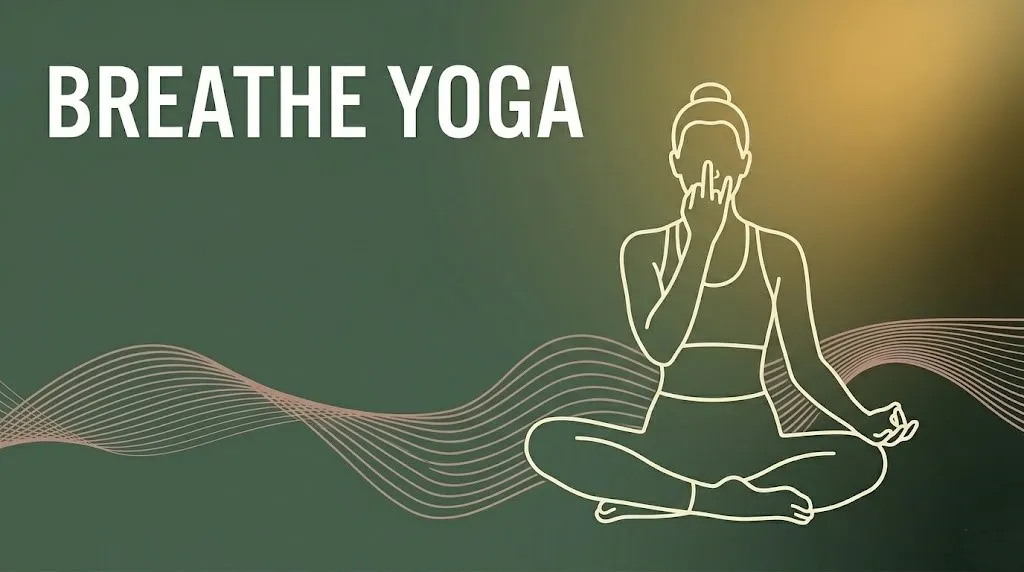
Breathe Yoga: Techniques That Transform Your Practice
Breathe yoga refers to the intentional integration of controlled breath into every aspect of your yoga practice, and it is the single most important skill that separates a yoga session from a simple stretching routine. When you learn to breathe with precision and awareness, your poses become steadier, your nervous system calms, and the physiological benefits of practice multiply in ways that movement alone cannot produce.
According to a 2021 review published in Frontiers in Human Neuroscience, conscious breath control during yoga activates the parasympathetic nervous system more reliably than movement alone, producing measurable reductions in cortisol, heart rate, and subjective stress levels. That finding puts breath exactly where experienced yoga teachers have always placed it: at the center of everything.
This guide covers the major breath techniques used in yoga, how and when to use each one, the science behind how breath changes your nervous system, and a practical pathway for building a home breathing practice from scratch. Whether you are searching for a local Breathe Yoga studio or trying to understand what breathing in yoga actually means, you will find clear, actionable answers here.
Breathe Yoga: What It Means and Why It Matters
Breathe yoga is the practice of coordinating breath consciously with movement, stillness, and mental focus throughout an entire yoga session, rather than breathing unconsciously as most people do during daily life.
In most yoga traditions, breath is not treated as a background process. It is the primary tool. Hatha yoga texts dating back centuries describe pranayama (regulated breath) as more foundational than physical postures. The word prana translates roughly as “life force” or “vital energy,” and ayama means “to extend or regulate.” Controlling breath, in the traditional view, is controlling the energy of the body itself.
In practical, modern terms, breathe yoga means this: every inhale and every exhale is deliberate. You breathe through the nose in most practices. You match breath timing to movement. You use specific breath techniques for specific goals, such as calming the nervous system, generating internal heat, or improving focus.
Key reasons breath matters so much in yoga:
- Movement cues: Inhales typically accompany expansive or lengthening movements; exhales accompany contracting or deepening movements
- Nervous system regulation: Slow, controlled breathing directly activates the vagal system and reduces sympathetic arousal
- Core stability: Proper diaphragmatic breath creates intra-abdominal pressure that supports the lumbar spine during poses
- Mental focus: Anchoring attention on breath prevents the mind from wandering and deepens the meditative quality of practice
The National Center for Complementary and Integrative Health (NCCIH) recognizes breath-based practices as a distinct and evidence-supported category of mind-body intervention, separate from physical exercise.
Modification note: If conscious breath control feels overwhelming as a beginner, start simply. Notice your natural breath for the first five minutes of practice. That awareness alone begins to shift how you move.
How to Breathe During Yoga
During yoga, breathe through the nose at all times unless a specific technique requires mouth breathing, and match your breath to your movement so that no pose begins or transitions without an intentional breath cue.
Nose breathing is not arbitrary. The nasal passages filter, warm, and humidify incoming air. They also produce nitric oxide, a molecule that dilates blood vessels and improves oxygen uptake in the lungs. Mouth breathing bypasses all of these functions and activates the upper chest rather than the diaphragm, making it less efficient for sustained practice.
The general rule for breath direction in yoga:
| Movement Type | Breath Direction | Why |
|---|---|---|
| Lengthening, rising, opening | Inhale | Creates space; supports expansive movement |
| Folding, lowering, contracting | Exhale | Releases tension; supports spinal flexion |
| Holding a still pose | Natural nasal breathing | Maintains parasympathetic state |
| Transitioning between poses | Full exhale before next inhale | Resets the breath cycle before each new shape |
| Twisting poses | Exhale to twist deeper | Exhalation reduces torso volume, allowing rotation |
Beginners often hold their breath during challenging poses without realizing it. This is one of the most common errors in yoga, and it triggers the stress response rather than calming it.
Practical tip: If you are holding your breath during a pose, the pose is either too intense or your attention has drifted from breath to effort. Back off slightly, re-establish your breath, and re-enter the shape with the next inhale.
Modification for beginners: In your first few sessions, simply focus on keeping the exhale longer than the inhale. An inhale of 4 counts and exhale of 6 counts is a reliable starting ratio that gently activates the parasympathetic nervous system without requiring any formal technique.
Yoga Breathing Techniques for Beginners
Beginners in yoga should start with two foundational techniques: natural nasal awareness breathing and Dirga Pranayama (Three-Part Breath), both of which are accessible, safe, and immediately calming.
Jumping straight into advanced pranayama like Kapalabhati or Bhastrika as a beginner is like learning to run before you have learned to walk. The foundational techniques build the breath awareness and diaphragmatic strength that advanced practices depend on.
Dirga Pranayama (Three-Part Breath) is the most beginner-friendly formal breath technique:
- Lie on your back in Savasana (Corpse Pose) or sit comfortably in Sukhasana (Easy Pose).
- Place one hand on your lower belly, just below the navel, and one hand on your upper chest.
- Exhale completely, releasing all air from the lungs.
- Inhale slowly. Fill the lower belly first, feeling the bottom hand rise.
- Continue inhaling into the side ribs, feeling the ribcage expand laterally.
- Complete the inhale by filling the upper chest, feeling the top hand rise last.
- Exhale in reverse: chest releases first, then ribs, then belly draws gently inward.
- Repeat for 5 to 8 breath cycles at a pace that feels steady and unconforced.
The American Lung Association notes that diaphragmatic breathing improves the efficiency of gas exchange and reduces the work of breathing, making it beneficial for everyday respiratory health, not just yoga.
Modification for anxiety: If watching the breath closely increases anxiety rather than calming it, shift attention to the physical sensation of air entering the nostrils. That sensory anchor is less cognitively demanding than counting or tracking three body zones.
Key Takeaway: Starting with Dirga Pranayama (Three-Part Breath) and simple extended-exhalation breathing gives beginners the foundation for every advanced technique in yoga, without any risk of overwhelm or overbreathing.
Breathe Yoga Schedule and Classes: What to Look For
When searching for a breathe yoga schedule or classes at studios like Breathe Yoga in Webster or Happy Valley, look for class descriptions that explicitly name the breath techniques taught, not just the style or difficulty level.
Many yoga studios use “Breathe Yoga” as a studio name precisely because they emphasize breathwork as a central teaching focus. If you are searching for a specific studio, the schedule page is your best first resource. Look for class types labeled “pranayama,” “breathwork,” “restorative,” or “breath-focused Hatha” as strong indicators that breath instruction will be a primary component.
For home practitioners or those without a local studio, virtual classes and apps now offer scheduled breathwork sessions that follow the same format as in-person classes. The format matters more than the location.
What to look for in a breath-centered yoga class:
- Named pranayama techniques listed in the class description (not just “breathing exercises”)
- Class length of 45 to 75 minutes, which allows adequate time for both movement and dedicated breath practice
- Teacher credentials indicating training in pranayama, therapeutic yoga, or Iyengar methodology, all of which emphasize breath instruction
- Beginner-friendly labels if you are new, since breath techniques have gradations of difficulty and intensity
| Class Type | Breath Focus Level | Best For |
|---|---|---|
| Restorative yoga | High (breath is the primary tool) | Beginners, stress management, seniors |
| Gentle or slow Hatha | High (breath cues throughout) | Beginners, people with health conditions |
| Vinyasa flow | Moderate (breath tied to movement) | Intermediate practitioners |
| Kundalini yoga | Very high (specific pranayama sequences) | Those seeking structured breathwork |
| Power or hot yoga | Lower (aerobic demand takes priority) | Advanced practitioners with established breath habits |
Safety note: If you have asthma, COPD, or cardiovascular conditions, choose restorative or gentle Hatha classes over vigorous or heated formats, and inform the teacher of your condition before the session begins.
Diaphragmatic Breathing Yoga
Diaphragmatic breathing in yoga refers to breathing where the diaphragm, the dome-shaped primary respiratory muscle beneath the lungs, does the majority of the work rather than the upper chest and neck accessory muscles.
Most people breathe shallowly through the upper chest for most of their lives, particularly during stress. This pattern recruits the scalenes, sternocleidomastoid, and upper trapezius muscles to assist breathing, which keeps these muscles chronically tense. Diaphragmatic breathing returns the work to where it belongs: the diaphragm itself.
Think of it this way. The diaphragm is like a piston at the base of the lungs. When it contracts and flattens downward on the inhale, it creates a pressure differential that draws air in efficiently. When shallow chest breathers override this piston with upper-body effort, they use far more muscular energy to move far less air.
In yoga, diaphragmatic breathing serves two functions simultaneously. It improves respiratory efficiency. And it generates the intra-abdominal pressure that stabilizes the lumbar spine during poses like Adho Mukha Svanasana (Downward-Facing Dog) and Virabhadrasana I (Warrior I).
Pose Tip:
- Place your hands on your lower belly during any seated or supine pose. You should feel the belly rise on the inhale and fall on the exhale.
- If the belly stays flat or pulls inward during inhalation, you are chest-breathing. Consciously release the abdominal wall to allow the belly to expand.
- Modification: Practice diaphragmatic breathing lying down first. Gravity makes the belly expansion more obvious and easier to feel.
Safety note: People with hiatal hernia may find that deep belly breathing increases discomfort. Practice with shallower breath depth and assess with your gastroenterologist before pursuing intensive breath training.
Ujjayi Breath Yoga
Ujjayi Pranayama (Victorious Breath) is a nasal breathing technique that creates a soft, audible oceanic sound by gently constricting the back of the throat (the glottis), and it is the primary breath technique used in Vinyasa and Ashtanga yoga classes.
The sound of Ujjayi serves a practical purpose. It gives the practitioner an immediate auditory feedback signal about breath quality. When the sound is smooth and consistent, the breath is steady. When it becomes choppy, strained, or disappears entirely, the practitioner has gone beyond their current capacity in a pose.
Ujjayi also slows the breath by adding slight resistance to both the inhale and exhale. That resistance increases the duration of each breath cycle, which amplifies the parasympathetic nervous system effect. A slower breath rate is directly correlated with lower heart rate variability and calmer nervous system activity, according to research published in the Journal of Alternative and Complementary Medicine.
To practice Ujjayi Pranayama:
- Sit comfortably or lie on your back. Close the mouth.
- Inhale slowly through both nostrils.
- As you exhale, slightly constrict the back of the throat as if you were fogging up a mirror, but keep the mouth closed. You should hear a soft “haaaa” sound internally.
- Apply the same gentle throat constriction on the next inhale. The inhale sound is softer than the exhale.
- Practice 5 to 10 breath cycles seated before attempting this during movement.
- Once comfortable, use Ujjayi throughout your Vinyasa or Hatha practice.
Modification for beginners: Learn the exhale first. Practice fogging an imaginary mirror with your mouth open (the “haaaa” sound is obvious here). Then close the mouth and recreate the same sensation nasally. The inhale constriction comes naturally after.
Safety caution: Do not force Ujjayi to be louder than a whisper. A harsh, strained sound indicates over-constriction and can create tension in the larynx.
Types of Breathing in Yoga
Yoga includes at least six distinct breath techniques, each with different physiological effects, appropriate contexts, and levels of difficulty, ranging from simple breath awareness to advanced pranayama with timed retention.
Understanding which type of breathing belongs in which context is what separates a well-designed yoga practice from one that inadvertently creates stress rather than releasing it.
| Breath Technique | Sanskrit Name | Primary Effect | Best Practice Context |
|---|---|---|---|
| Three-Part Breath | Dirga Pranayama | Diaphragmatic awareness, calming | Warm-up, Savasana, beginners |
| Victorious Breath | Ujjayi Pranayama | Thermal regulation, focus, steady pace | Vinyasa, Ashtanga, Hatha flows |
| Alternate Nostril Breathing | Nadi Shodhana | Nervous system balance, anxiety reduction | Meditation, transition, pranayama sessions |
| Bee Breath | Bhramari Pranayama | Vagal stimulation, stress relief, blood pressure | End of practice, anxiety relief |
| Skull-Shining Breath | Kapalabhati | Energizing, CO2 clearance, mental clarity | Beginning of Kundalini practice; not for beginners |
| Equal Breathing | Sama Vritti | Balanced nervous system, focus | Meditation, sleep preparation |
| Breath Retention | Kumbhaka | CO2 tolerance, pranayama training | Advanced practice only; requires supervision |
Each of these serves a different purpose. Kapalabhati and Bhastrika (Bellows Breath) are energizing and stimulating. Nadi Shodhana and Bhramari are calming and balancing. Ujjayi is steady and thermal. Using the wrong technique for your goal produces the opposite of the desired effect.
Modification note: Beginners should focus only on the first three techniques in this table for their first six to eight weeks of practice. The more stimulating techniques carry contraindications that make beginner use inadvisable without teacher supervision.
Key Takeaway: The type of breath you choose in yoga determines its effect. Calming techniques (Nadi Shodhana, Bhramari) and energizing techniques (Kapalabhati, Bhastrika) are not interchangeable, and using the wrong one for your goal undermines the entire session.
Pranayama Breathing Yoga
Pranayama is the formal, structured practice of breath regulation in yoga, distinct from simply “breathing consciously during poses,” and it constitutes one of the eight limbs of Patanjali’s classical yoga system.
The distinction matters. Breath awareness during asana (physical poses) is one dimension of breathe yoga. Formal pranayama is another, typically practiced separately from movement, either before or after asana, in a seated or supine position with dedicated time and attention.
The International Journal of Yoga has published over 40 studies on pranayama effects over the past decade. Across these studies, regular pranayama practice (defined as at least 3 sessions per week over 4 or more weeks) consistently produces:
- Reduced resting heart rate
- Lowered blood pressure in adults with mild to moderate hypertension
- Improved lung function measures including forced vital capacity
- Reduced subjective anxiety and depression scores
- Improved sleep quality and sleep onset latency
These effects accumulate. A single pranayama session produces short-term nervous system shifts. Consistent practice over weeks and months produces lasting structural changes in how the autonomic nervous system regulates itself.
Pose Tip:
- Sit in Sukhasana (Easy Pose) or on a chair with a tall spine for formal pranayama practice. Lying down tends to produce drowsiness rather than focused awareness.
- Keep a folded blanket or block under the sitting bones if the lower back rounds in a cross-legged position.
- Modification for respiratory conditions: if any pranayama technique produces dizziness, chest tightness, or air hunger, stop immediately and return to natural nasal breathing. These sensations indicate the technique is too advanced or the pace is too rapid.
Nadi Shodhana Yoga Breathing
Nadi Shodhana (Alternate Nostril Breathing) is a pranayama technique that alternates breath between the left and right nostrils to balance the activity of the left and right hemispheres of the brain and regulate the autonomic nervous system.
This is one of the most extensively researched pranayama techniques. A 2018 study in the International Journal of Yoga found that 30 days of daily Nadi Shodhana practice reduced resting heart rate, improved spatial memory performance, and decreased anxiety scores compared to a control group. Those are not trivial outcomes for a breathing practice that takes less than 10 minutes per day.
The technique works through a mechanism called nasal laterality. Research in neuroscience has established that the left and right nostrils are associated with different nervous system states. Breathing predominantly through the right nostril correlates with higher sympathetic activity. Left nostril dominance correlates with parasympathetic activity. Alternating systematically through Nadi Shodhana creates a balancing effect.
To practice Nadi Shodhana (Alternate Nostril Breathing) without retention:
- Sit tall in Sukhasana (Easy Pose) or on a chair. Rest the left hand on the left knee, palm up.
- Bring the right hand to the face. Place the right thumb beside the right nostril and the right ring finger beside the left nostril.
- Gently close the right nostril with the thumb. Inhale slowly through the left nostril for 4 counts.
- Close the left nostril with the ring finger. Open the right nostril. Exhale through the right for 6 counts.
- Inhale through the right for 4 counts.
- Close the right. Open the left. Exhale through the left for 6 counts. This completes one cycle.
- Practice 8 to 10 cycles without pausing or holding the breath.
Modification for hand mobility issues: Rest both hands in the lap and mentally alternate attention between left and right nostrils without the physical hand position. Studies suggest that even mental alternation without physical nostril closure produces partial effects.
Safety note: If you have a cold, sinus infection, or deviated septum that significantly blocks one nostril, wait until airflow is symmetrical before practicing this technique.
Yoga Breathing for Stress and Anxiety
Yoga breathing for stress and anxiety works by directly activating the vagus nerve through slow, controlled exhalation, which signals the nervous system to downregulate the stress response and reduce circulating stress hormones including cortisol and adrenaline.
Stress and anxiety keep the sympathetic nervous system overactive. This state produces shallow, rapid, upper-chest breathing. That shallow breathing pattern, in turn, signals the brain that a threat is present, creating a self-reinforcing loop where stress worsens breathing and poor breathing worsens stress.
Yoga breathing interrupts this loop from the bottom up. You cannot think your way into a calm nervous system, but you can breathe your way there. The breath is the one autonomic process you can consciously control, which makes it the most accessible entry point into nervous system regulation.
According to the Harvard T.H. Chan School of Public Health, slow diaphragmatic breathing at rates below 10 breaths per minute activates the baroreflex system (the body’s pressure-regulation network) and produces measurable reductions in anxiety within minutes. That finding explains why yoga teachers instruct students to slow down their breath before anything else when anxiety is present.
The two most effective yoga breath techniques for acute stress and anxiety:
- Extended exhalation breathing: Inhale for 4 counts, exhale for 6 to 8 counts. The longer exhale is the key activation signal.
- Bhramari Pranayama (Bee Breath): Inhale nasally, then exhale while producing a soft humming sound with the lips closed. The vibration directly stimulates the vagus nerve.
Modification: If anxiety makes formal breath techniques feel constricting, begin with five minutes of normal nasal breathing while lying in Balasana (Child’s Pose). The prone position and physical contact of the body with the floor naturally calm the nervous system, making breath awareness easier to access.
Key Takeaway: You can access stress and anxiety relief through breath within minutes because slow exhalation directly activates the vagus nerve. Bhramari (Bee Breath) and extended-exhalation breathing are the fastest-acting techniques for acute stress without any risk of overbreathing.
How Does Breathing Affect Yoga Performance
Breath directly determines how far you can progress in yoga poses, how long you can hold them, and how well your nervous system recovers between sessions, making breath management a performance variable, not just a wellness add-on.
This is the section that most yoga breath content misses entirely. Breathing is not passive during yoga. It is an active performance variable with biomechanical consequences.
Here is how breath affects specific aspects of yoga performance:
| Performance Area | Breath Effect | Practical Implication |
|---|---|---|
| Pose depth | Exhale reduces torso volume, allowing deeper flexion and rotation | Time your deepest fold or twist to the exhale |
| Balance and stability | Brief natural retention during balance activates core stabilizers | Do not force breath during standing balances; let it pause naturally |
| Strength in poses | Intra-abdominal pressure from diaphragmatic breath supports the spine | Never hold the breath forcefully; use gentle abdominal engagement |
| Recovery between poses | Slow nasal exhale after effort lowers heart rate faster | Take 2 to 3 slow breaths in a neutral pose between challenging shapes |
| Endurance in flows | Ujjayi breath regulates pace and prevents overexertion | If Ujjayi becomes strained, reduce the pace of the flow |
Think of Ujjayi breath like a tachometer in a car. When the sound becomes strained or disappears, you have gone into the red zone. The breath tells you to ease off before your form collapses.
Modification for beginners: Focus on a single breath principle per session rather than all of these at once. Start with “exhale into every fold” for the first month. Add “recover breath between poses” in month two. Build the skill set progressively.
Yoga Inhale Exhale Timing
Yoga inhale and exhale timing refers to the deliberate matching of breath phases to specific movements and the use of count-based or ratio-based breath patterns to create specific physiological effects during practice.
There is no single correct timing for all of yoga. Different styles use different ratios for different purposes. Understanding the rationale behind each timing pattern lets you choose intentionally.
| Breath Ratio (Inhale:Exhale) | Physiological Effect | Common Yoga Context |
|---|---|---|
| 1:1 (Sama Vritti) | Balanced nervous system activation | Meditation, seated pranayama, Savasana |
| 1:2 (4:8 or 3:6) | Parasympathetic activation, calming | Stress relief, end of class, anxiety management |
| 1:4:2 (with retention) | Advanced CO2 tolerance, focus | Advanced pranayama only; not for beginners |
| Natural (uncount) | Minimal intervention; observation only | During active Vinyasa flows, beginners |
| 4-7-8 pattern | Sleep induction, deep relaxation | End of Restorative practice, sleep preparation |
The 1:2 ratio (exhale twice the length of the inhale) is the most consistently supported in research for producing parasympathetic activation. It is also the most accessible for people without formal pranayama training.
Modification: Beginners should not count breaths during physically demanding poses. Counting requires cognitive bandwidth that can compromise alignment and safety. Practice breath ratios in seated or supine positions first, then gradually bring the awareness into simple standing poses.
Safety note: Never force a breath count that produces physical strain, lightheadedness, or air hunger. These are signals that the ratio is too demanding for your current lung capacity and breath control level.
Breathwork Yoga Practice
A breathwork yoga practice is a session structured primarily around pranayama and breath awareness, with physical poses serving as preparation or integration, rather than breath serving as a background element to movement.
This is distinct from a regular yoga class where teachers say “breathe” between instructions. A dedicated breathwork yoga practice gives breath the primary role. Movement, if included, is minimal and intentional. The session may look more like a seated meditation class than a typical flow, but its effects on the nervous system are often more pronounced than an hour of active asana.
The NCCIH classifies breathwork as a mind-body practice with its own evidence base, separate from physical yoga. Their review of breathwork research notes consistent findings of reduced anxiety, improved mood, and enhanced heart rate variability across diverse adult populations.
A sample 20-minute breathwork yoga structure:
- Minutes 0 to 3: Natural breath awareness in Sukhasana (Easy Pose) or lying flat
- Minutes 3 to 8: Dirga Pranayama (Three-Part Breath), 5 to 8 cycles
- Minutes 8 to 15: Nadi Shodhana (Alternate Nostril Breathing), 8 to 10 cycles
- Minutes 15 to 18: Bhramari (Bee Breath), 6 to 8 cycles
- Minutes 18 to 20: Savasana (Corpse Pose) with natural nasal breathing
This sequence moves from awareness to regulation to balance to vagal stimulation, then integrates in rest. Each technique builds on the previous one.
Modification for time-constrained practitioners: Even a 5-minute seated Nadi Shodhana session produces measurable nervous system effects. Frequency outperforms duration for breathwork, just as it does for meditation.
Key Takeaway: A dedicated breathwork yoga practice structured around pranayama techniques produces stronger and faster nervous system effects than movement-first yoga where breath is secondary. Even 5 to 10 minutes of formal breathwork three times per week adds measurable benefit.
Yoga Breath Retention Safety
Breath retention in yoga, known as Kumbhaka, is an advanced pranayama technique that should not be practiced by beginners, people with hypertension, heart conditions, anxiety disorders, glaucoma, or during pregnancy, as it temporarily increases intracranial and intrathoracic pressure in ways that require a well-established breath foundation to manage safely.
Kumbhaka comes in two forms:
- Antara Kumbhaka: Retention after the inhale, with lungs full. This temporarily raises intrathoracic pressure and can spike blood pressure.
- Bahya Kumbhaka: Retention after the exhale, with lungs empty. This creates a strong vagal effect and is often used in advanced Kundalini practices.
Both forms require years of gradual pranayama development before they are appropriate. The research literature on breath retention consistently notes that untrained practitioners who attempt formal Kumbhaka frequently experience dizziness, anxiety spikes, and in rare cases, brief cardiac irregularities.
Conditions where breath retention should be avoided entirely:
- Uncontrolled hypertension (above 140/90 mmHg)
- Glaucoma or elevated intraocular pressure
- Anxiety disorders (retention often triggers panic in sensitive individuals)
- Any trimester of pregnancy
- Active respiratory infection
- History of cardiac arrhythmia without physician clearance
Pose Tip:
- If your teacher introduces Kumbhaka in a class and you are uncertain of its safety for your body, simply omit the retention and continue the flow breath pattern.
- No legitimate yoga teacher will require retention from a beginner or pressure anyone to practice it before they are ready.
- Modification: Practice natural pauses between breaths rather than active retention. A momentary rest at the top or bottom of the breath is not the same as Kumbhaka and carries none of its risks.
How to Start a Breathing Yoga Practice at Home
To start a breathing yoga practice at home, begin with five minutes of Dirga Pranayama (Three-Part Breath) daily for two weeks before adding any other technique, building breath capacity and awareness progressively rather than attempting multiple techniques simultaneously.
Home practice gives you the privacy to move slowly, repeat techniques, and adjust without the pace of a group class. That makes it an ideal environment for learning pranayama, where your only feedback tool is your own internal sensation.
Here is a six-week progressive home breathing yoga plan:
| Week | Technique | Duration | Frequency |
|---|---|---|---|
| 1 to 2 | Dirga Pranayama (Three-Part Breath) | 5 minutes | Daily |
| 3 | Add extended exhalation (4:6 ratio) | 5 to 8 minutes | Daily |
| 4 | Add Ujjayi during simple seated poses | 10 minutes | 4 to 5x per week |
| 5 | Add Nadi Shodhana (without retention) | 10 to 15 minutes | 4 to 5x per week |
| 6 | Add Bhramari at end of session | 15 to 20 minutes | 4 to 5x per week |
Props that support home breathwork yoga:
- Bolster or rolled blanket: Supports the spine in seated positions and prevents the lower back from rounding
- Yoga block under sitting bones: Tilts the pelvis forward for better spinal alignment during pranayama
- Eye pillow or soft cloth over eyes: Reduces visual stimulation and deepens inward focus during breathwork
- Timer: Removes the need to watch a clock, allowing full attention on the breath
Modification for beginners with no yoga background: Start lying on your back rather than seated. Dirga Pranayama is easier to learn in a supine position because the floor provides proprioceptive feedback about belly movement. Move to seated practice once the three-part breath pattern feels natural.
Frequently Asked Questions About Breathe Yoga
What is breathe yoga and how is it different from regular yoga?
Breathe yoga refers to yoga practice where breath is taught as a primary skill, not a background process, often including formal pranayama instruction alongside physical poses.
Regular yoga classes vary widely in how much breath instruction they offer; some classes treat breath as incidental while breath-focused yoga treats it as the central discipline.
Studios using the name “Breathe Yoga” typically signal this emphasis in their class formats, particularly in restorative, Hatha, and pranayama-specific offerings.
How do you breathe correctly during a yoga class?
Breathe through the nose at all times during yoga, using the inhale for expansive movements and the exhale for folding or contracting movements.
The single most common error is holding the breath during challenging poses, which activates the stress response rather than calming it.
If your teacher uses Ujjayi (Victorious Breath), focus on creating a soft, smooth ocean sound; if the sound becomes strained, ease out of the pose slightly until the breath smooths out.
Is ujjayi breathing safe for beginners?
Ujjayi Pranayama is safe for most beginners when taught correctly, but it should be introduced in a seated position before being applied during movement.
Forcing the throat constriction too tightly or breathing too rapidly with Ujjayi can create unnecessary laryngeal tension, so start gently and prioritize smoothness over sound volume.
People with active laryngitis, severe asthma, or throat conditions should skip Ujjayi until those conditions resolve.
Can yoga breathing really reduce stress and anxiety?
Yes, and the evidence is substantial. A 2021 review in Frontiers in Human Neuroscience found that controlled yoga breathing reliably activates the parasympathetic nervous system and reduces cortisol levels within minutes of practice.
The extended exhalation pattern (exhaling longer than the inhale) and Bhramari (Bee Breath) are the two techniques with the strongest short-term anxiety-reduction evidence.
Consistent practice over four or more weeks produces lasting changes in how the autonomic nervous system responds to stress.
How long does it take to learn pranayama breathing in yoga?
Basic breath awareness and Dirga Pranayama (Three-Part Breath) can be learned functionally within two to four weeks of daily practice.
Ujjayi breath during movement typically takes four to six weeks to feel natural without conscious effort.
Advanced techniques like Nadi Shodhana with retention, Kapalabhati, and Bhastrika require a minimum of several months of foundational breath training and should be learned with a qualified teacher.
Build It Breath by Breath
Start with five minutes of Three-Part Breath today. Lie on the floor, hands on the belly and chest, and breathe into three sections of the lungs. That is the whole instruction for week one.
Everything else in this guide, from Ujjayi to Nadi Shodhana to formal pranayama, builds from that foundation. Skip it and the advanced techniques feel forced. Master it and the rest follows naturally.
Practice this daily for two weeks. Notice how your sleep changes. Notice how you handle the next stressful moment differently. Then add the next technique.