Best YouTube Yoga Channels: Honest Guide for 2026
The best YouTube yoga channels for most practitioners in 2026 are ones that offer clear alignment cues, consistent modification options, instructor credentials you can verify, and class structures matched to specific goals like back pain relief, anxiety management, or beginner skill-building. Not every popular channel delivers on those standards, and popularity alone is a poor guide to teaching quality.
The National Center for Complementary and Integrative Health (NCCIH) identifies yoga as an evidence-supported practice for reducing anxiety, managing chronic pain, and improving sleep quality. Research published in the International Journal of Yoga consistently shows that the quality of instruction matters for outcomes. Watching a compelling personality on screen is not the same as receiving instruction that builds safe, sustainable practice habits.
This guide evaluates what genuinely separates high-quality yoga channels from thin content, covers the best channel types by style, goal, and population, explains how to build a real practice structure from free YouTube content, and addresses the honest safety question that no other roundup bothers to answer: what are the actual risks of learning yoga from video, and how do you manage them?
Best YouTube Yoga Channels: How to Find the Right One
The best YouTube yoga channel for you is determined by three factors: your experience level, your primary physical or mental health goal, and the teaching style you can commit to consistently over weeks and months.
Experience level matters more than most people expect. A beginner who starts with a channel designed for intermediate Vinyasa practitioners will encounter poses, transitions, and sequences that their connective tissue and joint stability genuinely cannot handle safely yet. The result is not slower progress. It is often frustration, soreness, or minor injury that interrupts the practice before it takes root.
Your goal shapes your style selection. A person managing chronic low back pain needs a channel that emphasizes spinal decompression, core support, and grounding poses, not a dynamic flow class that loads the lumbar spine repeatedly in rapid transitions. A person managing anxiety needs slow breathwork-forward sessions, not a 45-minute cardio-adjacent Vinyasa class that leaves the nervous system more activated than it started.
| Selection Factor | What to Prioritize | What to Avoid |
|---|---|---|
| Complete beginner | Explicit step-by-step cues; modification in every pose | Channels assuming prior knowledge; fast transitions |
| Intermediate practitioner | Style-accurate instruction; progression offered | Channels recycling the same three sequences endlessly |
| Senior practitioner | Chair options; shorter sessions; slow pace | Channels with no seated or supported alternatives |
| Back pain management | Decompression focus; prop use demonstrated | Channels loading lumbar spine in rapid transitions |
| Anxiety and stress | Breathwork-forward; Yin or Restorative style | High-energy Vinyasa classes presented as stress relief |
| Flexibility goal | Yin yoga format; sustained holds explained | Dynamic stretching presented as Yin without the hold times |
Commitment consistency is the third factor. The most technically excellent channel in the world produces no benefit if the style, pacing, or teacher personality makes you skip sessions. A channel you actually use three times per week beats a channel you admire and rarely open.
What Makes a Good Yoga YouTube Channel
A genuinely good yoga YouTube channel offers clear alignment instruction, consistent modification cues, honest style labeling, and a teacher with verifiable credentials, not just a large subscriber count.
The single most useful quality criterion is whether the teacher offers modifications in every session, not just beginner-labeled ones. Bodies differ. A practitioner with tight hamstrings needs to hear block placement cues during Uttanasana (Standing Forward Fold) in an intermediate class just as much as a beginner does. Teachers who offer modifications throughout their catalog have internalized the principle that yoga is not one-size-fits-all. Teachers who offer them only in classes labeled “gentle” have not.
Instructor credentials are worth checking. The Yoga Alliance maintains a registry of Registered Yoga Teachers (RYT). An RYT-200 designation means the teacher has completed a minimum 200-hour training program verified by Yoga Alliance standards. An RYT-500 means 500 verified hours. An E-RYT (Experienced Registered Yoga Teacher) designation indicates both minimum hours and documented years of teaching experience. These are imperfect proxies for teaching quality, but they establish a baseline of formal training that matters when you cannot have a teacher physically observe your alignment.
Style accuracy matters and is frequently ignored in YouTube content evaluations. Hatha yoga and Vinyasa yoga are distinct practices. Yin yoga and Restorative yoga serve different physiological purposes despite both being slow-paced. A channel that mislabels its content puts practitioners in the wrong practice for their goals, which can mean doing physically activating classes when the nervous system needs recovery, or doing passive holds when the body needs strengthening.
Quick Summary: Quality Markers for a Good Yoga YouTube Channel
- Modifications offered in every class, not only beginner-labeled sessions
- Teacher credentials listed and verifiable (Yoga Alliance RYT-200 minimum as a baseline)
- Accurate style labeling: Hatha, Vinyasa, Yin, and Restorative described correctly and distinctly
- Class structure announced at the start: warm-up, main sequence, closing, Savasana
- Pose names given in Sanskrit and English on first introduction
- Safety notes integrated naturally into instruction, not omitted
Best YouTube Yoga for Beginners
The best YouTube yoga channel for beginners is one that teaches foundational pose mechanics, names poses in both Sanskrit and English, offers modifications in every session, and progresses at a pace that allows the body to adapt before adding complexity.
What beginners actually need from a YouTube channel is often different from what they search for. Many beginners search for “easy yoga” or “gentle yoga,” but ease is individual and body-dependent. A better search filter is: does this channel explain why the body is in this shape? Does it name the muscles involved? Does it show what to do when the standard version of a pose is inaccessible?
The most valuable videos for beginners are those that dedicate specific instruction to foundational poses. Tadasana (Mountain Pose) is not a warm-up formality. It is the most instructive pose in yoga for understanding postural alignment, weight distribution through the feet, and the relationship between the ankle, knee, hip, and spine. A beginner channel that treats Tadasana as something to rush through before the “real” class starts is skipping the most important material.
According to the American College of Sports Medicine, beginner practitioners benefit most from yoga instruction that emphasizes functional movement patterns, clear verbal cues, and progressive loading of joints over a minimum six-to-eight-week adaptation period before increasing practice intensity. This principle applies directly to how a beginner should evaluate and use YouTube content.
What to look for in a beginner yoga YouTube channel:
- Sessions of 20 to 30 minutes at a slow pace, allowing time to understand each pose
- Modification shown alongside the standard pose, not as a separate “easier” video
- Camera angle that shows the teacher’s full body during transitions, not just close-ups
- Explicit breath cues linking movement and inhalation or exhalation throughout
- A stated practice frequency recommendation so beginners know how often to return
Modification note: Beginners with wrist sensitivity should look for channels that proactively cue forearm or fist variations in Adho Mukha Svanasana (Downward-Facing Dog) rather than requiring the viewer to ask in comments.
Key Takeaway: The best YouTube yoga channels for beginners are not the most popular ones. They are the ones that explain why each pose is shaped the way it is, show modifications without making them feel remedial, and pace progression at a rate the body can actually absorb.
Best Vinyasa Yoga YouTube Channel
The best Vinyasa yoga YouTube channels are those that teach the breath-movement link accurately, cue safe transitions between poses, offer modifications for Chaturanga and other demanding transitions, and correctly represent Vinyasa as a specific method rather than a generic term for any flowing yoga.
Vinyasa yoga is a breath-synchronized movement practice. Each transition between poses is linked to either an inhalation or an exhalation. The practice builds cardiovascular endurance, dynamic strength, and body-coordination over time. It is genuinely demanding, particularly for the wrists, shoulders, and hip flexors in longer sessions.
The most common quality failure in Vinyasa YouTube content is the treatment of Chaturanga Dandasana (Four-Limbed Staff Pose) as an assumed ability. Chaturanga requires significant anterior shoulder and triceps strength, plus core integration, to perform safely. Practiced without that foundation, it compresses the shoulder joint and can contribute to rotator cuff strain over time. The best Vinyasa YouTube channels address this directly. They offer a knees-down modification explicitly, they explain why Chaturanga matters biomechanically, and they never treat it as a transition to rush through.
Vinyasa session length on YouTube varies considerably. A 30-minute Vinyasa class, well-taught, is more than sufficient for most practitioners three to four times per week. Sessions over 60 minutes require genuine endurance and joint stability. Beginners should start with 20 to 30-minute sessions and build duration gradually over eight or more weeks.
| Vinyasa Channel Feature | Strong Channel | Weak Channel |
|---|---|---|
| Chaturanga instruction | Modification always offered; biomechanics explained | Assumed ability; no modification shown |
| Breath-movement linking | Explicit inhale/exhale cue every transition | Breath mentioned vaguely or only at the start |
| Session length options | Range from 20 to 60 minutes available | Only 60-minute sessions; no short options |
| Pace variation | Builds pace through session; slows for complex poses | Constant fast pace regardless of pose complexity |
| Savasana included | Always; minimum 5 minutes | Often omitted or under 2 minutes |
Modification note: Practitioners with carpal tunnel syndrome or wrist arthritis should look for Vinyasa channels that consistently offer forearm plank as an alternative to full plank and wrist-bearing transitions.
Best Yin and Restorative Yoga YouTube Channels
The best Yin and Restorative yoga YouTube channels are those that accurately distinguish between the two styles, explain the physiological purpose of long holds, use props in every demonstrated pose, and do not rush transitions between shapes.
Yin yoga and Restorative yoga are related but distinct. Yin yoga involves passive holds of three to five minutes per pose with minimal prop support, targeting the connective tissue (fascia, ligaments, and joint capsules) rather than the muscular system. Restorative yoga uses extensive props to support completely passive positions held for ten to twenty minutes, with the primary goal of activating the parasympathetic nervous system and allowing full muscular release.
Confusing the two is common in YouTube content and matters practically. Yin yoga involves a gentle but sustained stress on connective tissue that produces real physical sensation, sometimes intense, during the hold. Restorative yoga should involve no sensation beyond warmth and ease. A person with hypermobile joints, inflammatory joint conditions, or recent injury should avoid Yin yoga and choose Restorative instead. A YouTube channel that labels everything slow as “Yin/Restorative” without distinguishing between them leaves practitioners without the information they need to make a safe choice.
According to the Journal of Alternative and Complementary Medicine, passive yoga holds of three minutes or longer produce measurable improvements in connective tissue extensibility and joint range of motion over eight weeks of consistent practice, compared to dynamic stretching of equivalent duration.
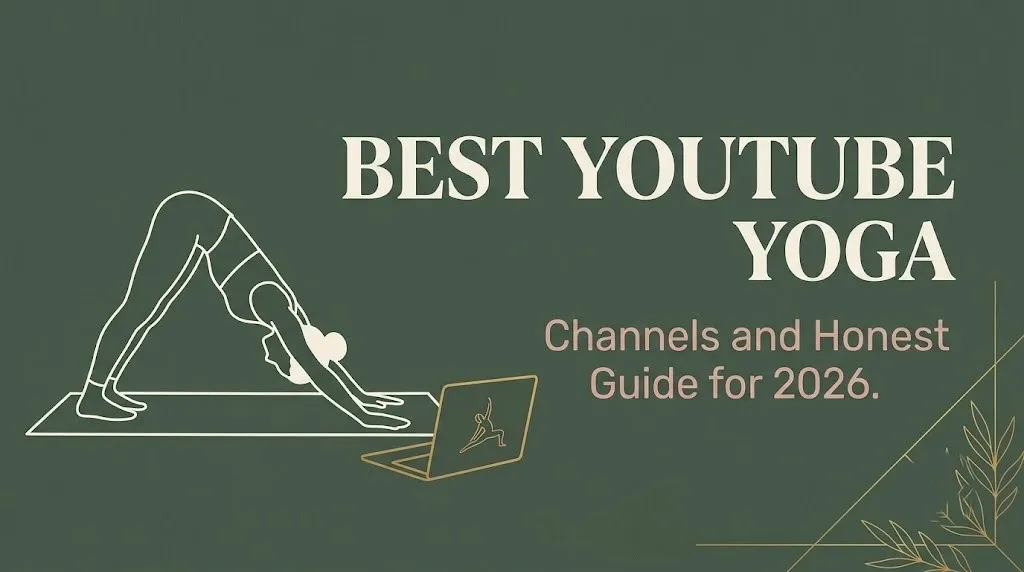
The best channels for both styles demonstrate prop use explicitly: bolsters under the spine, blocks under the knees, blankets for warmth in Savasana. A Yin or Restorative YouTube teacher who never shows a prop is either teaching in a studio where props are preset before recording or teaching in a way that leaves home practitioners without the support that makes long holds safe and sustainable.
Modification note: Anyone with sacroiliac joint instability should look for Yin channels that specifically address which hip-opening poses to approach cautiously or skip entirely.
Best Hatha Yoga YouTube Channel
The best Hatha yoga YouTube channels offer methodical, slower-paced instruction that holds poses for multiple breath cycles, explains the purpose of each shape, and covers the full spectrum of standing, seated, and supine poses without rushing to completion.
Hatha yoga is the foundational method from which most other modern yoga styles developed. In its purest form, Hatha yoga involves a balanced sequence of poses (asana), breathing practices (pranayama), and closing relaxation. Classes are generally held at a slower pace than Vinyasa, with poses held for three to eight breath cycles and transitions taken deliberately between shapes.
The most common misrepresentation on YouTube is calling anything slow or gentle “Hatha.” True Hatha instruction includes explicit alignment teaching, breath awareness integrated into every pose, and a balanced sequence covering the main movement planes: forward folds, backbends, lateral bends, and twists. A “Hatha” YouTube class that is simply slow Vinyasa without synchronized breath cueing is not teaching Hatha. It is teaching slow yoga and calling it something specific it is not.
Hatha yoga is an excellent match for practitioners who want a deliberate, technically thorough practice without the cardiovascular demand of Vinyasa. It is also the style most commonly recommended by yoga teachers and physical therapists for people managing chronic musculoskeletal conditions, because the slower pace allows genuine postural awareness to develop.
Key features of a quality Hatha YouTube channel:
- Pranayama component included: at least a brief breathwork section opening or closing the class
- Poses held long enough for genuine alignment adjustment, three to eight breaths minimum
- Equal attention to both sides of the body in asymmetrical poses
- A closing Savasana (Corpse Pose) held for a minimum of five minutes
- Teacher language that explains the purpose of each pose, not just the shape
Modification note: Beginners should look for Hatha channels that offer seated alternatives for any standing pose. A chair-supported version of Virabhadrasana II (Warrior II Pose) is entirely valid and preferable to forcing a standing version with poor alignment.
Key Takeaway: Style accuracy is the most underrated quality criterion for YouTube yoga channels. A channel that mislabels Vinyasa as Hatha, or calls slow yoga “Yin” without the long holds, puts you in the wrong practice for your goals. Check what the channel’s style descriptions actually mean before committing to a routine.
Best Morning Yoga YouTube Channels
The best morning yoga YouTube channels offer sessions of 15 to 30 minutes that begin with gentle joint mobilization, build gradually into moderate standing or seated poses, and close with a brief energizing breathwork sequence rather than a long Savasana.
Morning practice has a specific physiological context. After six to eight hours of sleep, the body is in a state of relative dehydration (the intervertebral discs rehydrate slowly during waking hours), reduced core temperature, and diminished synovial fluid circulation in the joints. A morning yoga class that opens with deep forward folds, aggressive hip openers, or rapid Vinyasa sequences ignores this context entirely and increases the risk of connective tissue strain.
The best morning YouTube yoga sessions follow a physiologically sensible arc. They start with supine joint circles and gentle spinal mobility. They build through seated or kneeling poses before asking the hips and hamstrings to work under load. They include at least three to five minutes of breathwork at the close, which activates the nervous system toward alertness without the cortisol spike of vigorous exercise.
A 2020 study published in Complementary Therapies in Medicine found that morning yoga practices lasting 20 to 25 minutes, incorporating breath-synchronized movement and brief mindfulness elements, produced greater self-reported alertness and reduced perceived fatigue across a workday compared to no morning movement practice.
Morning yoga channel features worth prioritizing:
- Session length of 15 to 30 minutes (longer sessions often lose practitioners mid-week when schedules tighten)
- Gradual warm-up arc: supine to seated to standing
- No aggressive deep stretching in the first five minutes
- Energizing breathwork close, not a long Savasana (save that for evening practice)
- Clear “no props needed” options for days when setup time is limited
Modification note: Anyone with morning stiffness from arthritis or inflammatory conditions should look for channels that open with five minutes of gentle supine movement before any weight-bearing pose.
Best YouTube Yoga for Seniors
The best YouTube yoga channels for seniors offer shorter sessions (20 to 40 minutes), provide chair alternatives for every standing pose, use slow pace with longer verbal explanations between poses, and never assume high baseline flexibility or joint mobility.
The physiological realities of aging that matter most for YouTube yoga selection include: reduced bone density in postmenopausal women and older men (relevant to any pose loading the spine asymmetrically), changes in joint cartilage thickness (relevant to hold duration in standing poses), reduced balance and proprioception (relevant to any standing balance work), and longer recovery time between sessions.
The Harvard T.H. Chan School of Public Health cites consistent yoga practice in older adults as associated with reduced fall risk, improved balance scores, and documented lower-body functional strength gains over twelve weeks. These benefits are accessible from well-designed YouTube content. But the key phrase is “well-designed.”
A senior-appropriate YouTube yoga session should never assume practitioners can easily transition from standing to the floor and back. Floor-to-standing transitions are one of the highest-risk moments in a yoga session for older adults with reduced balance or hip strength. The best senior-focused YouTube channels either teach these transitions explicitly and slowly, or design entire sessions that stay on one level (all chair, all floor, or all standing) to eliminate the transition risk entirely.
What to look for in a senior yoga YouTube channel:
- Chair yoga options integrated throughout, not just in a separate “chair yoga” playlist
- Sessions of 20 to 40 minutes, not 60 or 75 minutes that demand sustained endurance
- Verbal cues that name the muscles being targeted, so practitioners understand what to feel
- Explicit balance support cues: wall, chair, or second person
- No rapid transitions or complex sequencing requiring coordination under time pressure
Modification note: Seniors with diagnosed osteoporosis should look for channels that specifically address spinal flexion avoidance and avoid poses loading the vertebrae in extreme range of motion, and that ideally include guidance from a physical therapist consultant.
Best YouTube Yoga for Back Pain and Chronic Pain
The best YouTube yoga channels for back pain focus on spinal decompression, hip flexor mobility, core stabilization, and supported floor poses, while avoiding rapid transitions that load the lumbar spine under momentum rather than control.
According to a 2017 review published in Annals of Internal Medicine, yoga proved as effective as physical therapy for reducing low back pain intensity and improving functional ability over twelve weeks. The yoga interventions in that review used slow, posture-based formats with deliberate instruction and modification availability, exactly the characteristics of a quality YouTube yoga channel for back pain.
The anatomy of low back pain management in yoga comes down to two primary targets: the hip flexors and the erector spinae. Chronically shortened hip flexors pull the pelvis into anterior tilt, compressing the lumbar vertebrae from the front. Weak or overloaded erector spinae muscles fail to support the spine through dynamic movement. Yoga poses that address both, held long enough to create genuine adaptation rather than momentary stretch, are what back pain practitioners need.
Poses that should appear consistently in a quality back pain YouTube channel:
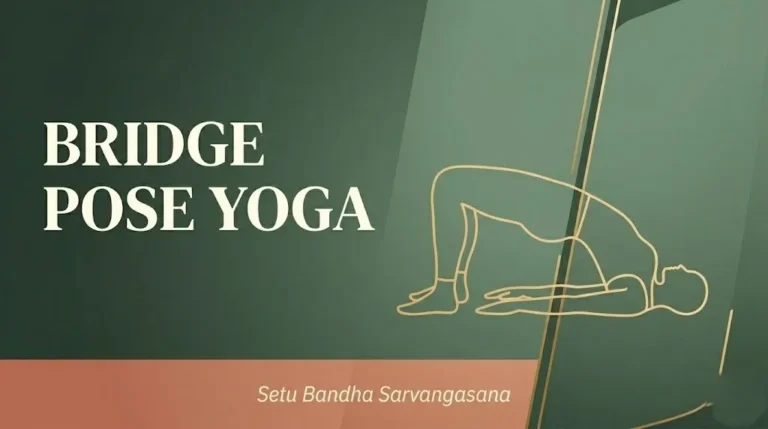
- Setu Bandha Sarvangasana (Bridge Pose): Strengthens gluteus maximus and erector spinae; supported version on a block decompresses the lumbar spine passively
- Balasana (Child’s Pose): Wide-knee version decompresses the lumbar spine with no axial loading
- Viparita Karani (Legs-Up-the-Wall Pose): Passive lumbar decompression; hip flexors release under gravity
- Supine spinal twist: Gentle lumbar rotation; pelvis stays supported throughout
- Sukhasana (Easy Pose) on a blanket: Relieves sacroiliac tension through seated hip flexor release
Safety note: YouTube channels for back pain should explicitly note that poses producing radiating leg pain, numbness, or tingling are signals to stop and seek assessment from a physical therapist before continuing. This nerve symptom guidance is absent from most back pain YouTube content and represents a real safety gap.
Modification note: Anyone with an acute disc herniation should look for channels that specifically address extension-preference or flexion-preference modifications based on symptom direction, or that clearly state when to defer to professional guidance.
Key Takeaway: For back pain, the YouTube channel you choose needs to show props in every session, cue lumbar decompression explicitly, and teach you what sensations to stop for. A channel that never mentions radiating leg symptoms is not teaching back pain yoga responsibly.
Best YouTube Yoga for Anxiety and Stress
The best YouTube yoga channels for anxiety and stress use slow breathwork-forward sessions, feature Yin or Restorative yoga formats, include extended Savasana (Corpse Pose) holds, and explicitly activate the parasympathetic nervous system through deliberate exhale extension.
Anxiety and chronic stress involve sustained sympathetic nervous system activation: elevated cortisol, shallow chest breathing, chronically contracted postural muscles, and a persistent background of physiological vigilance. The yoga channel type that most directly addresses this pattern is not a vigorous flow class. It is a slow, breath-centered session that specifically teaches extended exhale techniques and supported passive poses.
According to the National Center for Complementary and Integrative Health, yoga practices incorporating breathwork and guided relaxation consistently reduce self-reported anxiety scores and salivary cortisol levels across adult populations, with effects most pronounced after eight or more weeks of practice at two to three sessions per week.
The best YouTube yoga channels for anxiety teach Ujjayi breath (Victorious Breath) or Nadi Shodhana (Alternate Nostril Breathing) explicitly, not as an optional aside. They structure sessions so the breathwork comes first, not last. They hold closing Savasana for at least eight minutes, not the five-minute version that is standard in faster-paced styles. They also describe what the practitioner might feel during long holds, because the sensation of unfamiliar stillness can itself feel anxiety-provoking for someone new to slow practice.
Features of a quality anxiety-focused yoga YouTube channel:
- Pranayama taught explicitly: Ujjayi, Nadi Shodhana, or extended exhale breathing named and demonstrated
- Slow pace with session lengths of 20 to 40 minutes
- Yin or Restorative format (not relabeled Vinyasa)
- Savasana of eight minutes minimum
- Teacher voice calm, unhurried, and free of urgency cues
Modification note: People with acute anxiety or hypervigilance-related conditions may find lying flat in Savasana uncomfortable. Look for channels that offer a supported seated alternative with the back against a wall.
Best YouTube Yoga for Flexibility
The best YouTube yoga channels for improving flexibility use Yin yoga format with holds of three to five minutes per pose, teach the difference between muscular and connective tissue stretching, and progress systematically through hip, hamstring, and thoracic spine mobility over multiple sessions.
Flexibility in yoga is not improved by aggressive daily stretching. Think of tight hamstrings like a compression spring: pushing harder creates resistance, not length. Sustained low-load lengthening over time, which is exactly what Yin yoga holds accomplish, is what creates lasting change in connective tissue extensibility.
Research published in the Journal of Alternative and Complementary Medicine documents measurably greater improvements in hip and hamstring range of motion after eight weeks of Yin yoga practice compared to equivalent-duration dynamic stretching. The hold duration is the active ingredient: three to five minutes allows the nervous system to release its protective tone on the tissue, which is where the real adaptation begins.
The best flexibility-focused YouTube yoga channels are clear about what they are targeting in each session, naming specific muscle groups and joints. They cue prop use to make long holds accessible rather than painful. They distinguish between productive discomfort (the dull, even sensation of sustained tissue loading) and harmful pain (sharp, joint-located, or nerve-related sensations that signal damage rather than adaptation).
| Flexibility Channel Feature | What to Look For | What to Avoid |
|---|---|---|
| Hold duration | 3 to 5 minutes with a timer shown | Holds under 60 seconds labeled as Yin |
| Prop use | Blocks, blankets, and bolsters demonstrated | No props shown; floor assumed accessible |
| Sensation guidance | Productive discomfort described and normalized | Pain cues absent; “go deeper” without qualification |
| Target specificity | Hip flexors, hamstrings, thoracic spine named | Vague “stretch everything” sequencing |
| Session frequency | 2 to 3 times per week recommended explicitly | Daily practice advised without recovery guidance |
Modification note: People with hypermobility spectrum disorders or joint hypermobility syndrome should approach Yin yoga with caution. Channels that address hypermobility directly and cue proprioceptive engagement during long holds rather than passive surrender are the appropriate choice for this population.
Best Short Yoga Videos on YouTube
The best short yoga videos on YouTube are 15 to 30 minutes long, follow a complete class structure (warm-up, main sequence, closing), teach at least two to three poses with genuine alignment depth, and do not sacrifice modification guidance for the sake of fitting content into a compressed time frame.
Short yoga videos are the most searched format on YouTube, and also the most inconsistently executed. The challenge is that genuine yoga instruction takes time. A six-minute “morning yoga” video that runs through fifteen poses in rapid succession is not teaching yoga. It is demonstrating yoga shapes at a pace that prevents the practitioner from learning anything useful about alignment, breath, or body awareness.
The minimum viable structure for a genuinely useful 20-minute yoga session looks like this:
- Three to four minutes of breath centering and gentle joint mobilization
- Ten to twelve minutes of main sequence (four to six poses, held appropriately for the style)
- Three to four minutes of closing floor work or seated breathwork
- Two to three minutes of Savasana (Corpse Pose), even in a shortened form
Sessions shorter than fifteen minutes genuinely struggle to include adequate warm-up before loading joints and adequate cool-down after. The best short-format YouTube channels acknowledge this honestly and design their content to maximize what is possible in the time available, rather than cramming more poses in.
A study published in Complementary Therapies in Medicine found that yoga sessions as short as 20 minutes produced measurable reductions in cortisol and self-reported stress when the session included at least five minutes of breathwork and a brief closing relaxation, regardless of the number of poses included.
Modification note: Short session videos often skip modification cues due to time constraints. Look for channels that keep modification guidance even in abbreviated formats, or that include a linked longer version of the same sequence for days when more time is available.
Key Takeaway: A 20-minute YouTube yoga session with proper structure outperforms a 60-minute session of rapid pose cycling that skips warm-up, modifications, and Savasana. Session quality beats session length every time.
How to Build a Home Yoga Practice with YouTube
Building a sustainable home yoga practice with YouTube requires a weekly schedule, a clear style selection matched to your goal, one primary channel for consistency, and a realistic assessment of how much floor space and equipment you actually have available.
The most common failure mode of YouTube yoga practice is channel-hopping. Trying a different video every session prevents the progressive skill-building that makes yoga genuinely useful for the body. Yoga teaches the nervous system, connective tissue, and muscular system through repetition and gradual challenge. Practicing with the same teacher, in the same style, with a consistent frequency over eight or more weeks is what produces the outcomes research documents.
A practical four-week home practice structure for beginners:
- Week 1 and 2: Two sessions per week, 20 to 30 minutes each. Same channel. Same style. Focus on foundational poses only.
- Week 3 and 4: Three sessions per week. Same channel. Introduce one new 30-minute session alongside the two familiar ones.
- Month 2 onward: Three sessions per week, 30 to 45 minutes. Add a second complementary style from a different channel (for example, Yin yoga once per week alongside two Hatha or Vinyasa sessions).
Equipment needed for a functional home practice:
- A non-slip yoga mat on a firm floor surface
- Two yoga blocks (or stacked hardcover books as a temporary substitute)
- One yoga blanket (or a thick folded bath towel)
- A yoga strap (or a belt)
- Six to eight feet of wall space for balance support and Viparita Karani
Safety consideration for home practice: The absence of in-person alignment correction is the defining limitation of YouTube yoga. Practitioners should plan to attend an in-person class with a qualified teacher at least once every two to three months to have their alignment observed, especially in foundational poses like Adho Mukha Svanasana (Downward-Facing Dog), Tadasana (Mountain Pose), and Virabhadrasana I (Warrior I Pose). This is not because YouTube yoga is unsafe, but because misalignment habits that build gradually in home practice are much harder to correct later than they are to prevent early.
Yoga Apps vs YouTube: Which Is Better for Home Practice?
Yoga apps and YouTube each have genuine strengths for home practice, and the better choice depends on whether you value structured progression, cost, variety, or offline access.
YouTube offers the largest library of free yoga content available anywhere, with millions of videos across every style, duration, instructor background, and experience level. The quality range is extremely wide. There is no curation layer between a teaching video made by a fully credentialed, experienced teacher and one made by someone with no formal training whatsoever. The viewer bears the responsibility for evaluating quality, which requires the criteria outlined in this guide.
Yoga apps (dedicated platforms like Down Dog, Glo, or Alo Moves) typically charge a monthly or annual subscription fee and provide curated, structured content from instructors with verified credentials. The main advantages are: progressive sequencing that builds skills deliberately, offline access for travel or limited-data situations, and the confidence that content has been reviewed before publication. The main limitation is cost, which ranges from approximately 8 to 25 dollars per month depending on the platform.
| Feature | YouTube | Yoga Apps |
|---|---|---|
| Cost | Free | $8 to $25 per month typically |
| Content volume | Enormous; no curation | Curated; smaller library |
| Instructor credentials | Unverified; must check independently | Generally verified by platform |
| Progression structure | Requires self-curation | Built-in program structure available |
| Offline access | Requires YouTube Premium subscription | Available on most apps |
| Style accuracy | Inconsistent; check labels carefully | Generally accurate |
| Modification availability | Varies widely by channel | More consistently included |
| Best for | Variety, free access, style exploration | Structured learning, beginner progression |
The most practical approach for most home practitioners is to use YouTube for style exploration and supplementary sessions, and to invest in an app subscription once a clear style preference and consistent practice habit are established.
According to the Yoga Alliance, home yoga practice of any format produces the strongest outcomes when practitioners maintain a consistent frequency of at least two to three sessions per week over a minimum eight-week period, regardless of whether the content source is free online video or a paid application.
Key Takeaway: YouTube beats apps on cost and variety. Apps beat YouTube on structure and credential consistency. Use YouTube to find your style and your pace. Consider an app when you want progressive programming and are ready to invest in it.
Frequently Asked Questions About Best YouTube Yoga
Which YouTube yoga channel is best for absolute beginners?
The best YouTube yoga channels for absolute beginners are those offering 20 to 30-minute sessions that explain every pose from the ground up, show modifications alongside the standard version, and use both Sanskrit and English pose names.
Look for channels where the teacher explicitly cues breath throughout, not just at the start of class.
Channels with a structured beginner series of six to ten sequential videos are more useful than a large library of mixed-level content with no clear starting point.
Is free YouTube yoga as effective as studio yoga classes?
Free YouTube yoga can be highly effective for building a consistent practice, improving flexibility, managing stress, and developing foundational strength, provided the channel quality is high and the practitioner attends at least occasional in-person classes for alignment feedback.
The National Center for Complementary and Integrative Health notes that the measurable benefits of yoga, including cortisol reduction and improved sleep quality, are tied to consistent practice frequency and session quality, not to the payment model.
The primary limitation of YouTube yoga compared to studio classes is the absence of real-time alignment correction from a qualified teacher observing your body in each pose.
How long should my YouTube yoga sessions be as a beginner?
Most yoga teachers and physical therapists recommend 20 to 30-minute sessions for beginners, practiced two to three times per week during the first month.
This duration allows adequate warm-up, genuine pose instruction, and closing relaxation without exceeding the joint endurance and concentration capacity of someone new to the practice.
Extend session length gradually over the second and third month as the body adapts and pose familiarity reduces the cognitive load of following instruction.
Can I learn yoga safely from YouTube with no prior experience?
Yes, with specific precautions: choose channels with verified instructor credentials, always practice modifications rather than forcing the standard version of a pose, and attend an in-person class with a qualified teacher within the first two months to have foundational alignment checked.
The absence of a teacher’s eye on your body is the primary safety gap in YouTube yoga, and it can allow misalignment habits in foundational poses to build gradually into overuse strain.
Choosing channels that offer explicit modification cues, pose-by-pose safety notes, and clear guidance on what sensations should prompt you to stop and rest significantly reduces that risk.
What equipment do I need for a YouTube yoga practice at home?
To begin a functional home YouTube yoga practice, you need a non-slip yoga mat, two yoga blocks, one blanket, and access to a wall.
A yoga strap is a useful addition, particularly for forward fold and hip opener videos where limited hamstring flexibility would otherwise force the spine into compromising rounding.
You do not need special clothing, a heated room, or any digital equipment beyond a screen to display the video and a flat, firm floor to practice on.
Your Practice, Your Screen, Your Floor
The best YouTube yoga channel is the one you actually return to three times per week, with a teacher whose instruction you trust, in a style your body and nervous system genuinely need right now.
Start with one channel. Practice for four weeks before switching. Let the body adapt to one approach before diversifying. Pick sessions in the 20 to 30-minute range and build from there.
And once a month or so, get in front of a live teacher. Even a single studio class, workshop, or one-on-one session gives your home practice a quality-check that no screen can replicate. Both things can be true: YouTube yoga is genuinely valuable, and a real teacher’s eyes on your body are irreplaceable.