What Is Savage Yoga? Full Guide for Practitioners 2026
Savage yoga refers to high-intensity, athletically demanding yoga practice that pushes the boundaries of strength, endurance, balance, and mental focus well beyond what most standard classes offer. Whether you have encountered the term through a local savage yoga studio or through social media fitness culture, this guide gives you the complete picture of what the practice involves and whether it suits your body and goals.
High-intensity yoga formats are attracting growing interest from athletes, fitness enthusiasts, and practitioners who want more physical output from their yoga time. According to the National Center for Complementary and Integrative Health, yoga is now practiced by approximately 36 million Americans, with demand for more physically rigorous formats rising steadily among adults aged 25 to 45 who have prior athletic backgrounds.
This guide covers what savage yoga is and how it differs from other styles, what physical and mental benefits the research supports, which poses define its intensity, how to approach it safely from any fitness level, and how often to practice for real results.
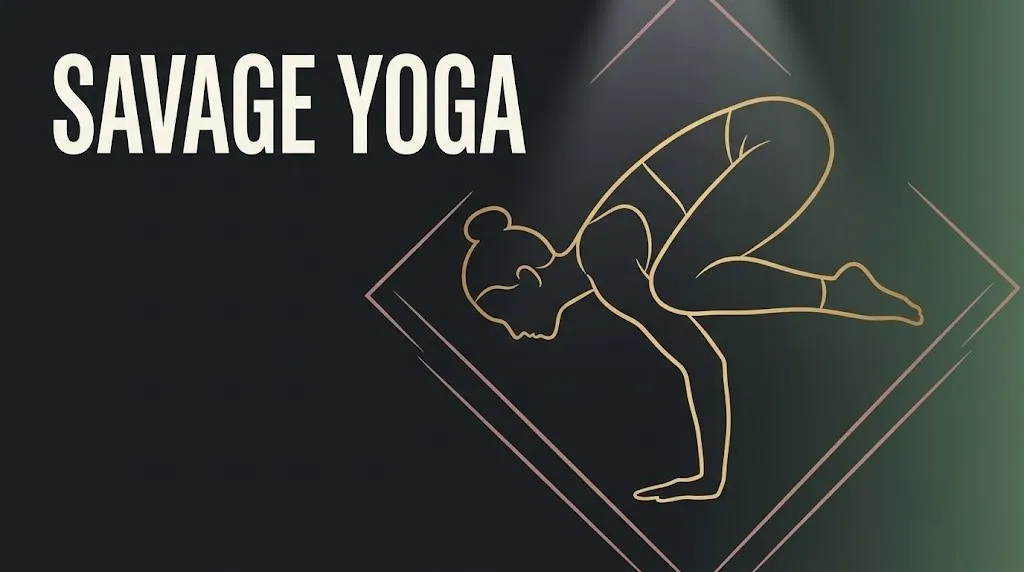
Savage Yoga
Savage yoga describes a physically demanding, strength-focused yoga practice that combines advanced postures, continuous flowing sequences, and high cardiovascular output in a format designed to challenge experienced practitioners while remaining adaptable for motivated beginners.
The term “savage” in a fitness context carries a specific cultural meaning: uncompromising, physically demanding, and results-oriented. Applied to yoga, it signals a departure from the gentle or meditative associations many people have with the practice. This is yoga that builds real strength, elevates the heart rate, and tests mental resilience alongside physical capacity.
The practice sits within the broader family of power yoga and athletic yoga formats. It draws on the flowing, breath-linked movement patterns of Vinyasa yoga, the strength demands of Ashtanga yoga, and the conditioning philosophy of modern functional fitness. What distinguishes it is the deliberate intensity: sequences are designed to fatigue the muscles and challenge the aerobic system simultaneously.
What defines a savage yoga practice:
- Advanced or modified advanced postures held under genuine muscular fatigue
- Continuous movement with minimal rest between sequences
- Core and upper body demands significantly higher than in standard yoga classes
- Mental focus requirements that match the physical challenge
- A culture of personal accountability and self-challenge rather than external competition
The intensity is not performance for its own sake. Every difficult posture in a well-designed savage yoga practice has a physical purpose: building the posterior chain, developing upper body pushing and pressing strength, or training the deep core stabilizers that protect the spine under load.
What Is Savage Yoga
Savage yoga is a high-intensity yoga format that integrates advanced yoga postures, strength-based movement patterns, and sustained cardiovascular demand into a structured practice designed to build athletic fitness alongside traditional yoga adaptations.
Unlike gentle yoga or restorative styles, savage yoga expects the practitioner to work hard throughout the entire session. There is no passive holding at the wall. There is no extended Savasana mid-class. The pacing is deliberately unrelenting, and that relentlessness is the point.
Two distinct uses of the term exist and are worth separating clearly. First, “savage yoga” appears as the brand name of specific yoga studios in various cities. These studios use the name to signal their class intensity and culture. Second, “savage yoga” circulates in fitness and social media communities as a descriptive term for any exceptionally intense yoga practice, regardless of studio affiliation.
Both uses share the same core characteristics: advanced postures, high-intensity sequencing, minimal rest, and a clear emphasis on physical performance. Whether you are researching a specific branded studio or trying to understand what an intense yoga practice looks like, the physical demands and the benefits are fundamentally the same.
According to the International Journal of Yoga, high-intensity yoga practices have been shown to produce cardiovascular adaptations comparable to moderate-intensity aerobic exercise when practiced consistently over eight to twelve weeks. That finding matters for fitness-oriented practitioners who want yoga to function as more than a flexibility tool.
Savage Yoga Studio: What to Look For
A savage yoga studio offers classes specifically designed around high-intensity, strength-focused yoga practice, and choosing the right one requires evaluating teacher credentials, class structure, and safety culture before committing.
Not all studios using the “savage yoga” branding offer the same quality of instruction or safety standards. The intensity of the format makes teacher training and experience more important than in gentler yoga classes. A teacher guiding students through advanced postures like Bakasana (Crow Pose), Pincha Mayurasana (Forearm Stand), or Sirsasana (Headstand) in a fast-paced flow setting carries real responsibility for student safety.
What to look for when evaluating a savage yoga studio:
- Teachers registered with Yoga Alliance at the 200-hour level minimum; 500-hour registration preferred for advanced class formats
- Clear class level labeling: beginner-friendly, intermediate, and advanced options communicated transparently
- An intake process for new students that assesses baseline fitness and yoga experience
- Prop availability: yoga blocks, yoga straps, and yoga wheels available to all students regardless of level
- A studio culture that treats rest and modification as intelligent choices, not signs of weakness
- Physical safety standards: adequately sized practice space, non-slip flooring, and climate control if the class is heated
A studio that discourages modifications or makes practitioners feel that resting is failure is a red flag in any intense yoga context. The best fierce yoga cultures prioritize intelligent effort over reckless pushing.
| Evaluation Factor | What a Good Studio Offers | Red Flag |
|---|---|---|
| Teacher credentials | Yoga Alliance 200H or 500H certified | No visible credentials listed |
| Class level clarity | Beginner, intermediate, advanced labeled | Single class level for everyone |
| Prop access | Blocks, straps, wheels available | No props in studio |
| New student process | Orientation or intake assessment | No new student guidance |
| Modification culture | Rest actively encouraged | Modification stigmatized |
Key Takeaway: Savage yoga, whether a studio brand or a practice philosophy, is defined by genuine physical intensity. Choose a studio that meets that intensity with equally serious safety standards.
Savage Yoga vs Regular Yoga
Savage yoga differs from regular yoga through its sustained high intensity, advanced posture demands, shorter rest periods, and explicit focus on athletic performance outcomes rather than primarily meditative or flexibility-centered goals.
In a standard Hatha yoga or beginner Vinyasa class, the heart rate stays in a low to moderate range, postures are held for several breaths with time to settle into alignment, and the overall pace allows for mindful, unhurried adjustment. Beginners and experienced practitioners can coexist comfortably in the same room.
Savage yoga changes every one of those variables. The pace is faster, the postures are more demanding, the transitions require more strength and coordination, and the rest periods are deliberately shortened to maintain cardiovascular and muscular stress. The result is a categorically different physiological experience.
Think of the difference like this: regular yoga is a long, deliberate hike with beautiful views. Savage yoga is a trail run up the same mountain. Both use the same terrain. One is meditative. The other is a conditioning session.
| Feature | Regular Yoga (Hatha/Vinyasa) | Savage Yoga |
|---|---|---|
| Heart rate range | 40 to 60% max HR | 65 to 85% max HR |
| Rest between sequences | Generous; multiple breaths | Minimal; transitions are continuous |
| Posture difficulty | Beginner to intermediate | Intermediate to advanced |
| Primary goal | Flexibility, mindfulness, balance | Strength, endurance, performance |
| Core demand | Moderate | High throughout |
| Skill entry point | Very low | Moderate to high |
| Calorie burn (60 min) | 200 to 350 kcal | 400 to 650 kcal |
| Injury risk | Low with proper guidance | Moderate; requires supervision |
Neither format is superior to the other. They serve different practitioners with different goals at different stages of life. Many experienced practitioners alternate between fierce and gentle practices across the week, using each to support the other.
What Style of Yoga Is Savage Yoga
Savage yoga is most closely related to Power Vinyasa yoga and Ashtanga yoga, both of which prioritize flowing movement, breath synchronization, upper-body strength, and a progressive posture difficulty curve within each session.
Ashtanga yoga, developed by K. Pattabhi Jois, uses a fixed sequence of postures practiced in a specific order, flowing breath to movement throughout. It is physically demanding, particularly in the primary and intermediate series, and forms the technical ancestor of most modern power yoga formats.
Baptiste Power Yoga, developed by Baron Baptiste, brought the athletic, heat-based intensity of Ashtanga into a less rigidly fixed format, making it more accessible as a studio class while retaining the cardiovascular and strength demands. Savage yoga sits within this lineage: athletically motivated, breath-centered, flowing, and physically challenging.
Where savage yoga sits among intense yoga styles:
- Ashtanga yoga: Fixed sequence, very high physical demand, traditional structure; six days per week practice norm
- Baptiste Power Yoga: Sequenced flow, heated room, athletic intensity, more accessible entry than Ashtanga
- Power Vinyasa: Teacher-designed flowing sequence, high intensity, broad stylistic variation
- Savage yoga: High-intensity sequencing with advanced postures, culture of self-challenge, strength emphasis; may be heated or unheated
What all these styles share is the demand for ujjayi breath (ocean breath), the deliberate linking of inhale and exhale to each movement, which creates the internal heat and focus that distinguishes intense yoga from athletic group fitness classes. The breath is not optional decoration in these formats. It is structural.
Key Takeaway: Savage yoga belongs to the family of athletic, power-based yoga styles. Understanding that lineage helps you find comparable classes if no branded savage yoga studio is available near you.
Savage Yoga Benefits
The benefits of savage yoga include improved muscular strength and endurance, cardiovascular conditioning, greater flexibility under load, enhanced balance and proprioception, and documented improvements in mental resilience and stress management.
Most of these benefits are supported by research on high-intensity yoga formats generally, since “savage yoga” as a specific brand has not yet been independently studied. The physiological outcomes of intense, athletic yoga practice are well-documented across multiple formats that share the same structural characteristics.
Documented benefits of high-intensity yoga practice:
- Muscular strength: Repeated bodyweight resistance through advanced postures develops the triceps, anterior deltoids, core stabilizers, glutes, and quadriceps meaningfully over six to twelve weeks
- Cardiovascular endurance: Sustained elevated heart rate during flowing sequences produces aerobic adaptations comparable to moderate-intensity cycling or rowing
- Flexibility under load: Unlike passive stretching, yoga postures build what researchers call functional flexibility: the ability to access range of motion while the muscles are actively working
- Balance and proprioception: Single-leg and inverted postures train the neuromuscular system to maintain stability under conditions of physical fatigue
- Cortisol regulation: High-intensity yoga sessions followed by structured cool-down and Savasana (Corpse Pose) produce measurable reductions in cortisol within 90 minutes of class, according to research published in the Journal of Alternative and Complementary Medicine
- Mental resilience: Holding demanding postures while fatigued trains the practitioner’s capacity to remain focused and calm under discomfort, a skill that transfers directly to athletic and daily-life performance
Savage Yoga for Strength and Muscle Building
Savage yoga builds functional strength and lean muscle mass primarily through sustained bodyweight resistance in advanced postures, with particular emphasis on the upper body pressing chain, core stabilizers, and lower body posterior chain.
The upper body demand in an intense yoga practice is genuinely serious. A single Chaturanga Dandasana (Four-Limbed Staff Pose) sequence requires the triceps brachii, anterior deltoids, and pectoralis major to lower the body under control against gravity. In a typical savage yoga session, this movement might appear 15 to 30 times as part of sun salutation variations and pose transitions. That is a meaningful volume of pressing work.
The core demand is continuous rather than intermittent. Every standing balance, every plank transition, every twist, and every inversion requires the transverse abdominis and erector spinae to stabilize the spine throughout. Unlike isolated core exercises performed lying on the floor, yoga core work happens while the entire body is loaded and moving.
According to research published in Complementary Therapies in Medicine, yoga-based bodyweight resistance practiced four times per week for 12 weeks produced measurable increases in upper body and core strength comparable to moderate-weight resistance training in previously active adults. The key factor was the high volume of repeated loaded movement, not the absolute resistance.
To build strength through savage yoga most effectively:
- Prioritize form in Chaturanga Dandasana (Four-Limbed Staff Pose) above all other postures; this is where most strength development and most injury risk both live
- Spend additional time in lower body postures like Utkatasana (Chair Pose) holds of 5 to 10 breaths to maximize glute and quadriceps fatigue
- Add arm balances progressively over weeks, not days
- Track posture quality over time, not just completion
Modification: Anyone with wrist pain or recent wrist fracture should replace full plank transitions with forearm-based versions and skip arm balances until the wrist is fully rehabilitated.
Savage Yoga Cardiovascular Benefits
Savage yoga produces genuine cardiovascular conditioning by maintaining the heart rate in the aerobic training zone (60 to 85 percent of maximum heart rate) for sustained periods through continuous flowing movement and brief high-demand posture transitions.
The cardiovascular mechanism differs from standard steady-state cardio. In savage yoga, the heart rate rises and falls in a wave pattern as the practice moves through demanding sequences and brief lower-intensity linking postures. This pattern closely resembles interval training, and the American College of Sports Medicine identifies interval-based cardiovascular work as one of the most time-efficient methods for improving aerobic capacity in adults.
What cardiovascular adaptations regular practice produces:
- Reduced resting heart rate within six to eight weeks of consistent practice
- Faster heart rate recovery between intense sequences (improved cardiovascular efficiency)
- Increased stroke volume: the heart pumps more blood per beat, reducing the effort needed for any given intensity level
- Improved oxygen utilization at submaximal exercise intensities
- Enhanced thermoregulatory efficiency if the practice is performed in a heated room
These adaptations translate directly to other athletic activities. Swimmers, runners, cyclists, and team sport athletes who add savage yoga to their training routinely report improved endurance and breath control in their primary sport.
Modification: Practitioners with a history of cardiovascular disease, arrhythmia, or uncontrolled blood pressure should discuss participating in high-intensity yoga with their cardiologist before attending, as the combination of physical exertion and heated room conditions creates a significant cardiac stimulus.
Savage Yoga for Weight Loss
Savage yoga supports weight loss by producing caloric expenditure of approximately 400 to 650 calories per 60-minute session, building lean muscle mass that raises the resting metabolic rate, and reducing the cortisol-driven stress eating patterns that often undermine other weight-loss approaches.
The caloric range is wide because body size, fitness level, ambient temperature, and effort intensity all affect individual expenditure. A larger, less-fit practitioner early in adaptation burns toward the higher end of that range. A smaller, highly fit practitioner doing the same class burns toward the lower end.
Research published in the Journal of Alternative and Complementary Medicine found that high-intensity yoga practiced three times per week for 16 weeks produced measurable reductions in body fat percentage and waist circumference in previously active adults, independent of dietary changes. The combination of caloric expenditure, lean muscle development, and cortisol reduction appears to create a more favorable metabolic environment for fat loss than caloric expenditure alone would predict.
| Weight Loss Factor | Savage Yoga’s Contribution |
|---|---|
| Caloric expenditure per session | 400 to 650 kcal |
| Lean muscle development | Meaningful, particularly upper body and core |
| Resting metabolic rate effect | Indirect increase via muscle tissue gain |
| Cortisol management | Documented reduction post-practice |
| Sustainability factor | High due to skill progression and community |
The most common weight-loss mistake with any yoga format is eating back the entire caloric expenditure from class. Yoga intensifies hunger, partly through thermoregulation and partly through genuine muscular glycogen depletion. A moderate post-practice meal of whole foods manages this effectively without eliminating the caloric benefit.
Key Takeaway: Savage yoga creates a genuine caloric deficit, builds muscle, and regulates the stress hormones that drive overeating. All three mechanisms working together make it more effective for weight management than caloric burn alone suggests.
Savage Yoga Poses and Sequences
A savage yoga session typically builds through a warming flow, a peak posture sequence featuring advanced arm balances or inversions, a challenging lower body series, and a structured closing that includes adequate cool-down time.
The selection of poses distinguishes a savage practice from a moderate one. Where a standard class might offer Adho Mukha Svanasana (Downward-Facing Dog) as a resting posture, a savage sequence uses it as a transition between demanding movements. Where a moderate class holds Virabhadrasana II (Warrior II) for three breaths, a savage version holds it for ten, then transitions directly to a balance challenge.
Signature poses in a savage yoga sequence:
- Chaturanga Dandasana (Four-Limbed Staff Pose): Upper body pressing strength; performed repeatedly throughout class as a transition
- Bakasana (Crow Pose): Core compression and wrist-loading arm balance; tests hip flexors, adductors, and arm strength simultaneously
- Vasisthasana (Side Plank Pose): Oblique and hip abductor strength; often performed with leg extensions or hip dips added
- Navasana (Boat Pose): Deep hip flexor and core compression; held for extended breath counts
- Pincha Mayurasana (Forearm Stand): Inverted balance requiring shoulder stability, core control, and mental focus
- Virabhadrasana III (Warrior III): Single-leg balance with posterior chain loading; often combined with arm variations for added shoulder work
- Utkatasana (Chair Pose): Sustained quadriceps and glute fatigue; held significantly longer than in standard classes
To practice a foundational savage yoga flow at home:
- Begin with 5 rounds of Surya Namaskar A (Sun Salutation A), holding each Chaturanga Dandasana for 3 full breaths rather than transitioning quickly
- Move into Utkatasana (Chair Pose) and hold for 10 breaths, arms raised overhead
- Transition to Vasisthasana (Side Plank Pose) on each side, holding for 5 breaths, with the top leg extended
- Lower to Navasana (Boat Pose) and hold for 10 breaths, then lower halfway and hold for 5 more
- Attempt Bakasana (Crow Pose) for 3 to 5 breath cycles, then rest in Balasana (Child’s Pose) for 5 breaths before repeating
Modification: Replace Bakasana (Crow Pose) with a deep squat with arms extended forward if wrist strength is not yet sufficient. Replace Pincha Mayurasana with Dolphin Pose against the wall to build the shoulder strength needed for the full inversion.
Savage Yoga for Athletes and Advanced Practitioners
Savage yoga serves athletes and advanced practitioners by developing the functional strength, joint stability, breath control, and mental resilience that sport-specific training often neglects.
Most athletes develop impressive strength and conditioning within a narrow movement range. A cyclist has exceptional quadriceps and cardiovascular capacity but often limited hip extension, thoracic rotation, and shoulder mobility. A team sport athlete may have explosive power but poor single-leg stability under fatigue. Savage yoga addresses these gaps systematically.
The breath control element is particularly valuable for athletes. Ujjayi pranayama (ocean breath), the regulated nasal breathing pattern used throughout intense yoga flows, trains the practitioner to maintain steady respiratory control under physical stress. Runners, swimmers, and combat sport athletes report that consistent ujjayi practice improves their ability to control breathing during competition.
According to the Harvard T.H. Chan School of Public Health, yoga-based mobility and stability training reduces overuse injury rates in athletes who practice consistently compared to athletes relying solely on sport-specific training. The mechanism appears to be improved neuromuscular coordination and better tissue extensibility at the joints most stressed by the primary sport.
Advanced practitioners benefit from the progressive posture hierarchy in savage yoga. Once Bakasana (Crow Pose) is stable, the logical progression is Eka Pada Bakasana (One-Legged Crow Pose). Once a stable Sirsasana (Headstand) is achieved, the practice moves toward Sirsasana II variations with leg extensions. This progression keeps experienced practitioners engaged and developing for years.
Modification: Athletes returning from lower-body injuries should reduce or eliminate jumping transitions between postures and focus on single-leg strength work at the wall before returning to free-standing balance and plyometric-style flows.
How to Do Savage Yoga at Home
Practicing savage yoga at home requires a non-slip yoga mat with adequate space, knowledge of the key postures and their safe progressions, and an honest assessment of your current strength and mobility baseline.
The home practice environment removes the safety net of a live teacher’s eye. That is a genuine consideration for an intense yoga format. Practicing advanced postures like Sirsasana (Headstand) or Pincha Mayurasana (Forearm Stand) alone at home carries higher injury risk than doing so in a supervised class. If you are new to these postures, build them in a studio setting first.
For the postures that are safe to practice alone, the home environment offers real advantages: you control the temperature, the pacing, and the music. You can repeat challenging sequences without class time constraints and rest when your body genuinely needs it rather than when the class format dictates.
Essential setup for home savage yoga practice:
- A non-slip yoga mat of at least 4mm thickness for joint protection
- Two yoga blocks for modification support in standing and floor postures
- A yoga strap for any postures involving shoulder or hamstring flexibility limits
- A yoga wheel if available, for backbend preparation and thoracic mobility work
- A wall for inverted posture practice until freestanding balance is established
- Access to a quality video class or structured written sequence to guide progressive difficulty
Modification: Home practitioners should always have a folded blanket or cushion placed in front of the head during any inversion practice as a landing safeguard. Never practice Sirsasana (Headstand) alone at home without first achieving a stable, consistent hold in a supervised setting.
Is Savage Yoga Good for Beginners
Savage yoga is not the ideal starting point for complete beginners, but motivated individuals with a baseline of physical fitness can participate safely by using modifications, choosing appropriate entry-level classes, and building foundational skills before attempting advanced postures.
The honest answer is that the name itself signals a practice designed for practitioners who already have some yoga and fitness experience. A complete beginner attempting a full savage yoga class without prior yoga knowledge faces a high cognitive and physical load simultaneously: learning alignment, synchronizing breath to movement, managing fatigue, and attempting advanced postures all at once.
That said, many studios using the savage yoga name or philosophy offer beginner-accessible variations within their classes. The key is finding a teacher who actively cues modifications and creates a culture where doing less is respected rather than stigmatized.
Recommended preparation before attending a savage yoga class:
- Complete at least 8 to 12 standard yoga classes to develop basic pose familiarity
- Build baseline upper body strength: aim for 5 to 10 full push-ups before attempting Chaturanga-based flows
- Develop core stability: hold a forearm plank for 30 to 60 seconds with good alignment
- Practice ujjayi breath (ocean breath) for 5 to 10 minutes daily before your first class
- Tell the teacher you are new before class begins so they can offer targeted guidance
According to yoga teachers and physical therapists generally, the risk of acute muscle strain and joint injury in high-intensity yoga is meaningfully higher for practitioners without foundational pose knowledge. Building that foundation first is not timidity. It is preparation.
Savage Yoga Modifications and Safety
Savage yoga modifications allow practitioners at all levels to access the intensity and benefits of the practice while staying within the safety limits of their current strength, mobility, and injury history.
The intensity of savage yoga creates a specific injury risk profile distinct from gentler yoga styles. The most commonly affected areas are the wrists, shoulder girdle, and lumbar spine, all of which bear significant load in the arm balance, plank, and inversion work that defines the format.
Condition-specific modifications for savage yoga:
- Wrist pain or carpal tunnel syndrome: Replace full plank and Chaturanga Dandasana with forearm versions; use fist position in weight-bearing postures to reduce wrist extension load; avoid Bakasana (Crow Pose) and all hand-balance postures
- Shoulder impingement or rotator cuff issues: Skip overhead pressing movements and all inverted postures; perform all postures at or below shoulder height; reduce the Chaturanga depth to a modified version with knees on the floor
- Lumbar disc issues: Avoid deep forward folds under speed; keep core actively engaged before all loaded movements; skip deep backbends and focus on gentle thoracic extension only
- Knee pain: Reduce depth in all lunge and squat patterns; avoid kneeling on the bare floor without a folded blanket for cushioning; skip jumping transitions between postures
- Hypermobility: Focus on muscular engagement rather than range of motion; avoid moving into end-range positions; use blocks to limit depth in postures where joints over-extend easily
Signs to stop practice immediately:
- Sharp pain in any joint, particularly the wrists, shoulders, or knees
- Pain (not stretch) in the lumbar spine during any backbend or forward fold
- Dizziness, nausea, or loss of breath control
Key Takeaway: The same intensity that makes savage yoga effective also makes thoughtful modification non-negotiable. Knowing when to use a block, when to drop to the knees, and when to rest is the mark of an intelligent fierce practitioner.
How Often Should You Do Savage Yoga to See Results
Practicing savage yoga three to four times per week produces the most consistent results for strength, cardiovascular fitness, and body composition, with adequate rest days between sessions supporting the muscular repair that drives adaptation.
Once per week maintains basic fitness awareness and flexibility. Twice per week begins producing measurable cardiovascular and strength improvements over six to eight weeks. Three to four times per week is where research consistently places the threshold for meaningful body composition and athletic performance changes.
The high physical demand of savage yoga means recovery is not passive. Between sessions, the muscles targeted in arm balances, core work, and lower body sequences need 48 hours of reduced loading to repair and adapt. Practicing every day without recovery days blunts adaptation and increases injury risk.
Frequency guide for savage yoga practitioners:
| Experience Level | Recommended Sessions Per Week | Primary Outcome |
|---|---|---|
| Beginner (less than 3 months yoga) | 1 to 2 | Baseline conditioning, heat adaptation |
| Intermediate (3 to 12 months yoga) | 2 to 3 | Cardiovascular improvement, early strength gain |
| Experienced (1 year or more) | 3 to 4 | Body composition change, skill progression |
| Advanced athlete practitioner | 4 to 5 | Performance optimization, peak conditioning |
Rest days are ideally filled with light movement rather than complete inactivity. A 30-minute gentle Yin yoga or Restorative yoga session on recovery days maintains tissue mobility, supports parasympathetic nervous system recovery, and keeps the practice habit consistent without adding high-intensity loading to already-fatigued tissues.
According to the American College of Sports Medicine, training frequency for muscular endurance and body composition improvement in adults should include at least one full rest day per week from high-intensity activity, with two preferred for practitioners over age 40.
Frequently Asked Questions About Savage Yoga
What exactly is savage yoga and how is it different from regular yoga?
Savage yoga is a high-intensity, athletically demanding yoga practice that uses advanced postures, continuous flowing movement, and minimal rest to build strength, endurance, and cardiovascular fitness.
It differs from regular yoga by maintaining a significantly higher heart rate throughout class, incorporating advanced arm balances and inversions, and emphasizing athletic performance outcomes alongside traditional yoga benefits like flexibility and mindfulness.
The practice shares roots with Ashtanga and Power Vinyasa yoga but carries a distinct cultural identity centered on personal challenge and physical intensity.
Is savage yoga good for beginners with no yoga experience?
Savage yoga is not recommended as a first yoga experience for complete beginners without any prior yoga or fitness background.
Most practitioners benefit from attending 8 to 12 standard yoga classes before joining an intense format to develop basic pose alignment, breath awareness, and upper body strength.
Beginners who are already physically fit from other training can adapt more quickly, particularly if they communicate with the teacher before class and freely use modifications throughout.
How many calories does a savage yoga session burn?
A 60-minute savage yoga class burns approximately 400 to 650 calories for most adults, depending on body size, fitness level, and session intensity.
The continuous movement and high cardiovascular demand push the heart rate into the aerobic training zone for most of the session, producing caloric expenditure comparable to moderate-intensity cycling or a vigorous run.
Individual variation is significant; wearable device estimates for yoga tend to undercount caloric expenditure because they do not account for isometric muscle loading.
What are the main benefits of savage yoga for strength and fitness?
Savage yoga builds upper body pushing and pressing strength through repeated Chaturanga Dandasana (Four-Limbed Staff Pose) sequences, develops core stability through continuous loaded movement, and improves cardiovascular endurance through sustained high heart rate work.
Research published in Complementary Therapies in Medicine found that high-intensity yoga practiced consistently produced strength gains in the upper body and core comparable to moderate-weight resistance training over a 12-week period.
Balance, proprioception, and mental focus also improve measurably with regular practice, making it a genuinely well-rounded conditioning format.
How often should I do savage yoga to see real results?
Practicing savage yoga three to four times per week is the research-supported frequency for meaningful strength, cardiovascular, and body composition results.
Most practitioners notice improved cardiovascular recovery and reduced muscular soreness within three to four weeks, with visible strength and muscle tone changes appearing between six and ten weeks of consistent practice.
Recovery days between sessions matter as much as the sessions themselves; filling rest days with gentle yoga or light movement accelerates adaptation without adding high-intensity stress.
Start Where You Are and Build From There
Three sessions per week is the number. Mark three days in your week, show up to those sessions, use modifications without apology, and track how the postures evolve over two to three months. The results in a fierce yoga practice accumulate in layers, not overnight.
If you are new to this intensity level, start with foundational posture work and build the wrist and shoulder strength that advanced postures demand. If you are already athletic and experienced, find a studio or sequence that genuinely challenges you and commit to consistent attendance.
Savage yoga rewards the practitioner who shows up consistently over the one who shows up occasionally at maximum effort.