Ebb and Flow Yoga: Complete Beginner to Pro Guide 2026
Ebb and flow yoga is a breath-led practice that matches movement to your body’s natural rhythms. It builds on Vinyasa principles but adds intentional pacing: you speed up, slow down, and pause based on how your body responds.
A 2022 review published in the International Journal of Yoga found that rhythm-based movement practices reduced perceived stress by up to 30% in adults who practiced three times per week. That research helps explain why this style keeps gaining attention among both newer practitioners and experienced yogis looking for something less rigid.
Below, you will find a clear breakdown of what this practice actually involves, the poses and sequences that define it, how it compares to Vinyasa, and who benefits most. Whether you are exploring yoga in Asbury Park or building a home practice, every section gives you something you can use on the mat right away.
Ebb and Flow Yoga
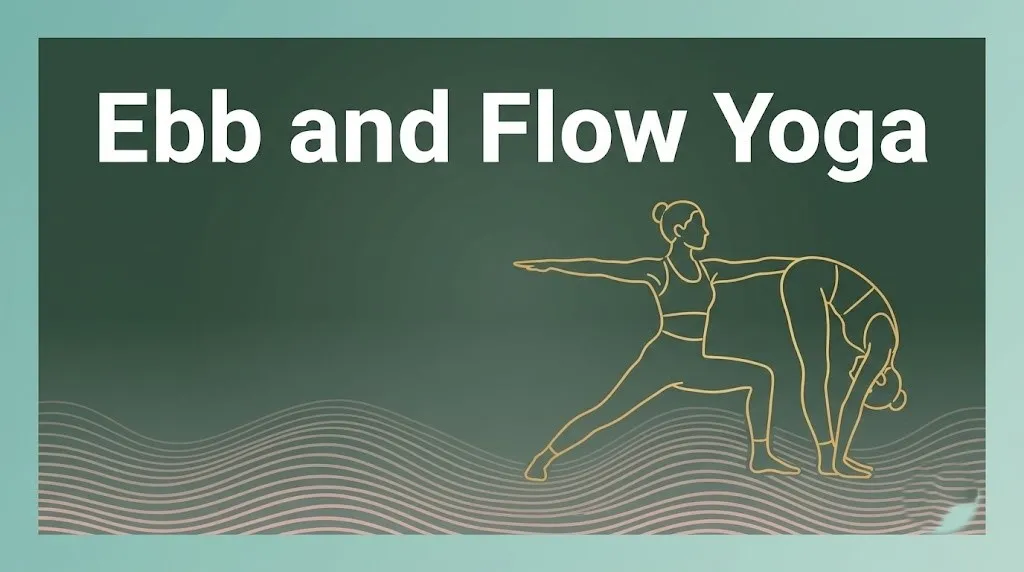
Ebb and flow yoga is a movement practice where the pace of your sequence rises and falls like a tide, guided by your breath and energy level. The name comes from the ocean’s natural cycle of advancing and retreating waves.
This style is not a formally codified system like Ashtanga or Iyengar. Instead, it represents a teaching philosophy adopted by studios and instructors who want their classes to feel organic rather than predetermined. A teacher might build the class intensity for 15 minutes, then ease into slower, deeper holds for 10 minutes, then build again.
The practice typically includes standing flows, balance work, and grounded postures arranged in a wave-like arc. You will not find a fixed sequence repeated class after class. Each session responds to the room, the students, and the teacher’s intention for that day.
| Feature | Ebb and Flow Yoga | Traditional Vinyasa |
|---|---|---|
| Pace | Variable, wave-like | Steady, consistent |
| Sequence | Changes each class | Often semi-fixed |
| Breath role | Primary pace driver | Synchronized but secondary |
| Intensity curve | Rises and falls | Generally builds upward |
Studios using this name, including those in the Asbury Park, NJ area, tend to attract a mix of experience levels. The variable pacing means beginners can find space to rest while experienced practitioners can push harder during peak segments.
What Is Ebb and Flow Yoga
Ebb and flow yoga is a style of breath-synchronized movement where the class tempo intentionally shifts between periods of higher intensity and periods of rest or deep stretching. It is rooted in the idea that your body and mind function best when movement mirrors natural rhythms rather than pushing at a constant pace.
Think of it like interval training, but gentler and less mechanical. Instead of timed intervals on a clock, the transitions happen when the breath signals readiness. Your inhale lifts you into a standing pose. Your exhale softens you down.
The philosophy draws from Vinyasa (linking breath to movement) and Hatha (holding poses with attention). Teachers who use this approach often blend those two foundations with elements of Restorative yoga during the slower phases.
Key principles of the ebb and flow approach include:
- Breath-first pacing: Your breath sets the tempo, not a playlist or clock
- Intensity waves: Sequences build to a peak and then recede, sometimes multiple times per class
- Body listening: Students are encouraged to modify, skip poses, or rest without judgment
- Non-repetitive sequencing: Classes change daily rather than following a fixed script
According to the National Center for Complementary and Integrative Health (NCCIH), yoga practices that emphasize breath regulation and body awareness are associated with reduced anxiety symptoms and improved mood in adults. The ebb and flow model leans heavily into both of those elements.
Yoga Asbury Park
Yoga in Asbury Park, NJ has grown into one of the Jersey Shore’s most active wellness communities, with studios offering everything from heated Vinyasa to gentle Restorative and ebb and flow classes. The city’s creative, independent culture has attracted teachers who favor non-traditional, community-centered approaches.
Asbury Park’s yoga scene is relatively compact but diverse. Within a few blocks, you can find studios that specialize in vigorous flow, prenatal yoga, and slower therapeutic styles. Several studios use the “ebb and flow” branding or philosophy to signal that their classes welcome mixed levels and adapt to the group’s needs.
The coastal setting matters more than you might think. Many Asbury Park studios draw on the ocean metaphor directly, incorporating wave-like pacing, outdoor beach classes in warmer months, and a general emphasis on fluidity over rigidity.
For someone searching for yoga in Asbury Park, here is what the local landscape typically includes:
| Studio Type | Class Styles Offered | Best For |
|---|---|---|
| Ebb and flow studios | Variable-pace Vinyasa, gentle flow | Mixed levels, beginners |
| Hot yoga studios | Heated Vinyasa, 26&2 (Bikram-style) | Those seeking intensity and heat |
| Community centers | Hatha, chair yoga, senior classes | Budget-friendly options |
| Beach/outdoor classes | Seasonal Vinyasa, meditation | Warm weather, casual practice |
If you are visiting or new to the area, call ahead or check studio websites for class level descriptions. Many Asbury Park studios offer a first-class-free or discounted intro package.
Key Takeaway: Ebb and flow yoga is a wave-paced, breath-driven practice that adapts to your body in real time, and the Asbury Park yoga scene is one of the best places to experience it firsthand along the Jersey Shore.
Asbury Park Yoga
Asbury Park yoga refers to the local yoga community and studio offerings in Asbury Park, New Jersey, a small city known for its arts scene, boardwalk culture, and growing wellness presence. The area has become a hub for teachers who want to build studios outside the high-rent pressure of New York City while still serving dedicated practitioners.
What sets the Asbury Park yoga community apart from other mid-size city scenes is accessibility. Classes tend to cost less than in Manhattan or Brooklyn, and studios often run on a sliding-scale or donation-based model. That openness attracts a wider range of students, from complete newcomers to yoga teachers in training.
Several studios in the area have built strong reputations for teacher training programs accredited through Yoga Alliance. If you are considering a 200-hour or 500-hour certification, Asbury Park is worth researching as a training location that balances quality instruction with a supportive, less competitive atmosphere.
Things to know about Asbury Park yoga before your first visit:
- Parking: Street parking is available but can fill during summer months; some studios have nearby lots
- Class sizes: Typically 10 to 25 students, smaller than city mega-studios
- Community focus: Many studios host workshops, kirtan, and social events beyond regular classes
- Seasonal variation: Beach yoga and outdoor workshops run primarily from May through September
- Drop-in friendly: Most studios allow single-class drop-ins without a membership
The mix of ebb and flow, Vinyasa, Yin, and Restorative options means you can practice almost any style within a short drive or walk. That variety is hard to find in towns of similar size.
Ebb and Flow Yoga Style
The ebb and flow yoga style is defined by its rhythmic pacing, where sequences build in intensity, reach a peak, and then soften into slower, more grounded postures. This wave-like structure is the core feature that separates it from linear class formats.
In a typical ebb and flow class, the first 10 to 15 minutes might include gentle warm-up movements: Marjaryasana-Bitilakasana (Cat-Cow), seated spinal twists, and slow hip circles. Then the teacher builds into standing flows, perhaps a Surya Namaskar (Sun Salutation) series that gradually increases speed and complexity.
After that peak, the class does something different from a standard Vinyasa session. It recedes. The teacher might move the group into Virabhadrasana II (Warrior II) holds, balance work at a slower tempo, or seated stretches. Then the intensity may build again, creating a second wave.
This structure tends to look like a waveform rather than a straight uphill climb:
| Class Phase | Typical Duration | Example Poses | Intensity Level |
|---|---|---|---|
| Warm-up | 10 to 15 min | Cat-Cow, seated twist, neck rolls | Low |
| First build | 10 to 15 min | Sun Salutations, standing flows | Medium to high |
| First ebb | 5 to 10 min | Warrior holds, hip openers | Low to medium |
| Second build | 10 to 12 min | Arm balances, deeper backbends | High |
| Cool-down | 10 to 15 min | Seated folds, Savasana | Very low |
Pose Tip:
- The “ebb” phases are not filler; they are where your nervous system integrates the work
- Use ebb phases to check your alignment rather than zoning out
- Beginners can extend ebb phases by resting in Balasana (Child’s Pose) while others continue the second build
Ebb and Flow Yoga Benefits
The benefits of ebb and flow yoga stem from its combination of cardiovascular movement during peak phases, deep stretching during slower phases, and continuous breath regulation throughout. This blend targets multiple body systems within a single session.
The American College of Sports Medicine (ACSM) recognizes yoga as a valid form of exercise for improving flexibility, muscular endurance, and balance in adults. The ebb and flow model adds a mild cardiovascular component during its building phases, which many purely static yoga styles do not provide.
Research published in Complementary Therapies in Medicine (2021) found that participants who practiced breath-synchronized yoga three times per week for eight weeks showed measurable reductions in salivary cortisol, a biomarker for physiological stress. The rhythmic pacing of ebb and flow sessions aligns closely with the protocols used in those studies.
Documented and research-supported benefits include:
- Improved flexibility: Repeated transitions through end-range positions increase range of motion over time
- Stress reduction: Breath-focused movement activates the parasympathetic nervous system, which downregulates the stress response
- Better balance and proprioception: Standing balance poses during peak phases challenge stabilizer muscles and spatial awareness
- Cardiovascular conditioning: Flow phases elevate heart rate mildly, providing low-impact aerobic activity
- Enhanced body awareness (interoception): Alternating between effort and ease trains you to notice internal signals more accurately
One benefit that gets less attention is the mental training effect. Learning to push during the “flow” phase and then genuinely soften during the “ebb” phase builds a skill that transfers off the mat: the ability to shift between effort and rest without guilt or anxiety.
Key Takeaway: The ebb and flow style is not just a gentler Vinyasa; its wave structure specifically trains your nervous system to shift between activation and recovery, which is where most of the stress-reduction benefits actually come from.
Ebb and Flow Yoga vs Vinyasa
Ebb and flow yoga differs from traditional Vinyasa primarily in pacing structure: Vinyasa maintains a relatively steady pace throughout, while ebb and flow deliberately varies tempo within the same class. Both link breath to movement, but they use that link differently.
In a standard Vinyasa class, the sequence typically builds from warm-up to peak pose and then winds down for Savasana. The pacing stays fairly consistent during the standing flow portion. Your heart rate rises and stays elevated for most of the middle section.
Ebb and flow classes break that pattern. Instead of one build and one wind-down, you might experience two or three intensity waves. The effect on your body is different: your heart rate rises, then drops, then rises again. This pattern more closely resembles how your autonomic nervous system naturally oscillates during the day.
| Factor | Ebb and Flow | Traditional Vinyasa |
|---|---|---|
| Pacing | Wave-like, variable | Steady, builds linearly |
| Number of intensity peaks | 2 to 3 per class | Typically 1 |
| Heart rate pattern | Rises and falls repeatedly | Rises and holds, then drops |
| Breath emphasis | Primary driver of all transitions | Synchronized but often cued externally |
| Sequence predictability | Low; changes each class | Moderate; semi-fixed sequences common |
| Best for | People who want variety within one class | People who prefer consistent pacing |
| Modification-friendly | Very; ebb phases provide natural rest | Moderate; teacher must cue modifications |
Neither style is better in absolute terms. If you prefer a predictable rhythm you can settle into, Vinyasa is likely your fit. If you get bored or fatigued in steady-state classes, the ebb and flow model gives you built-in recovery windows without stepping off the mat.
For people managing joint stiffness or returning from injury, the ebb phases serve as a natural pacing mechanism. You do not have to flag down the teacher for a break; the break is part of the design.
Ebb and Flow Yoga Sequence
A typical ebb and flow yoga sequence follows a wave pattern: build, peak, soften, rebuild, peak again, and then gradually wind down toward stillness. Here is a 45-minute sample sequence you can practice at home or use as a template.
Phase 1: Opening Ebb (8 minutes)
- Begin in Sukhasana (Easy Seated Pose); take 10 slow breaths
- Move into Marjaryasana-Bitilakasana (Cat-Cow) for 8 rounds
- Shift to tabletop and circle the hips 5 times in each direction
- Press back to Balasana (Child’s Pose); hold for 5 breaths
Phase 2: First Flow Build (12 minutes)
- Rise to Tadasana (Mountain Pose) at the top of the mat
- Flow through 3 rounds of Surya Namaskar A (Sun Salutation A)
- Add Virabhadrasana I (Warrior I) on each side, holding 5 breaths
- Transition through Chaturanga Dandasana to Urdhva Mukha Svanasana (Upward-Facing Dog)
- Return to Adho Mukha Svanasana (Downward-Facing Dog); hold 5 breaths
Phase 3: Mid-Class Ebb (7 minutes)
- Walk feet to hands; fold in Uttanasana (Standing Forward Fold) for 5 breaths
- Slowly roll up to standing
- Move into Vrksasana (Tree Pose) on each side; hold 8 breaths per side
- Return to Tadasana; close eyes for 5 breaths
Phase 4: Second Flow Build (10 minutes)
- Flow through 3 rounds of Surya Namaskar B (Sun Salutation B)
- Add Virabhadrasana II (Warrior II) and Trikonasana (Triangle Pose) on each side
- Include Utkatasana (Chair Pose) for 5 breaths
- Optional: add Bakasana (Crow Pose) or hold Chaturanga for 3 breaths
Phase 5: Closing Ebb and Cool-Down (8 minutes)
- Seated Paschimottanasana (Seated Forward Fold); hold 8 breaths
- Supta Matsyendrasana (Supine Spinal Twist) each side; hold 8 breaths
- Savasana (Corpse Pose) for 3 to 5 minutes
Pose Tip:
- Skip Phase 4 arm balances if your wrists are sore or you are newer to the practice
- Replace Chaturanga with knees-chest-chin (Ashtanga Namaskara) if needed
- Use a yoga block under each hand in forward folds if your hamstrings are tight
Ebb and Flow Yoga Poses
The poses used in ebb and flow yoga are not exclusive to this style. What makes them distinctive is how they are arranged: higher-effort poses cluster in the “flow” phases, while grounding and restorative poses fill the “ebb” phases. Here are the most common poses organized by their typical placement.
Flow Phase Poses (Higher Intensity):
- Surya Namaskar A and B (Sun Salutation A and B): Full-body warm-up sequences
- Virabhadrasana I, II, III (Warrior I, II, III): Lower body strength, hip opening, balance
- Utkatasana (Chair Pose): Quadriceps, glutes, and spinal erectors
- Chaturanga Dandasana (Four-Limbed Staff Pose): Triceps, anterior deltoids, core
- Bakasana (Crow Pose): Wrist stability, core engagement, hip flexor activation
Ebb Phase Poses (Lower Intensity):
- Balasana (Child’s Pose): Spinal decompression, hip flexor lengthening
- Supta Baddha Konasana (Reclined Bound Angle): Inner thigh and groin release
- Paschimottanasana (Seated Forward Fold): Hamstring and lumbar stretch
- Supta Matsyendrasana (Supine Twist): Thoracic spine rotation, oblique stretch
- Savasana (Corpse Pose): Full nervous system reset
| Pose | Phase | Primary Target | Modification |
|---|---|---|---|
| Warrior II | Flow | Quads, hips, shoulders | Shorten stance for knee comfort |
| Chair Pose | Flow | Quads, glutes, core | Hands on hips instead of overhead |
| Child’s Pose | Ebb | Hips, spine | Place bolster under torso |
| Seated Forward Fold | Ebb | Hamstrings, lower back | Bend knees; use a strap around feet |
| Crow Pose | Flow (optional) | Core, wrists, hip flexors | Place a block under feet for support |
Every pose listed above can be adapted with props. A yoga block, a strap, and a bolster cover the modification needs for 90% of an ebb and flow class.
Key Takeaway: The specific poses in an ebb and flow class are familiar Vinyasa and Hatha staples; what defines the style is how they are sequenced in alternating waves of effort and recovery.
Ebb and Flow Yoga for Beginners
Ebb and flow yoga is one of the more beginner-accessible flow styles because the built-in rest periods give new practitioners time to recover, check form, and catch their breath. You are never expected to maintain peak effort for the entire class.
Beginners often struggle in standard Vinyasa because the continuous pace can feel relentless. Miss one transition, and it is hard to rejoin the sequence. In ebb and flow classes, the periodic slowdowns act as natural re-entry points. If you fell behind during a Sun Salutation series, the next ebb phase brings everyone back together.
That said, beginners should set realistic expectations. Even during slower phases, you are still working. Holding Virabhadrasana II (Warrior II) for 8 breaths demands more from your quadriceps and hip stabilizers than most people expect.
Tips for beginners starting ebb and flow yoga:
- Start with 30-minute classes or home sessions before committing to 60-minute classes
- Keep a yoga block within reach at all times for standing poses and forward folds
- Choose a spot near the back of the room so you can watch more experienced practitioners
- Rest in Child’s Pose whenever you need to, regardless of what the teacher is cueing
- Focus on breath first, form second, depth last: getting the breath rhythm right matters more than achieving full pose expression early on
According to the NCCIH, yoga is generally considered safe for healthy people when practiced under qualified instruction, but beginners should inform their teacher about any existing injuries or conditions before class.
A reasonable first-month goal: practice two to three times per week, sticking mainly with the warm-up and first flow phases. Let the second build be optional until your stamina and familiarity with the poses increase.
How to Practice Ebb and Flow Yoga at Home
Practicing ebb and flow yoga at home requires a quiet space, a basic set of props, and a clear structure that alternates between active movement and slower recovery. You do not need a teacher present once you understand the wave pattern.
The most common mistake in home practice is skipping the ebb phases. Without a teacher to cue the slowdowns, many people just keep flowing until they are exhausted. Set a timer or use a playlist with tempo changes to remind yourself when to shift from effort to ease.
Minimum equipment for home practice:
- A yoga mat with good grip (at least 5mm thick for joint cushioning)
- Two yoga blocks (cork or foam)
- One yoga strap (or a belt or towel)
- A bolster or firm pillow for ebb phases
- Optional: a blanket for Savasana warmth and knee padding
To set up your home ebb and flow practice:
- Choose your total time: 20, 30, or 45 minutes
- Divide into roughly equal “build” and “ebb” segments
- Start with 3 to 5 minutes of seated breathing
- Enter your first build phase with Sun Salutations or standing flows
- Drop into your first ebb phase with a forward fold, twist, or Child’s Pose
- Build again with more complex poses or longer holds
- Close with 5 to 8 minutes of seated stretches and Savasana
Pose Tip:
- Film yourself occasionally to check alignment (phone propped against a wall works fine)
- Practice in socks on a wood floor if your mat slides; switch to bare feet on the mat for grip
- If you have wrist sensitivity, keep your forearms flat on a block during plank and Chaturanga alternatives
A 2024 study in the Journal of Alternative and Complementary Medicine found that home-based yoga practice produced similar improvements in flexibility and self-reported well-being compared to studio-based practice, as long as sessions occurred at least twice per week and lasted 20 minutes or more. You do not need a studio to get results.
Breath-Led Yoga Flow
A breath-led yoga flow is any yoga sequence where the breath dictates the timing of every transition, rather than the teacher’s verbal speed or a musical beat. In ebb and flow yoga, this principle is the foundation of the entire practice structure.
Here is how it works in practice. Your inhale initiates upward or expansive movements: lifting the arms, rising from a fold, opening the chest. Your exhale guides downward or contractive movements: folding forward, lowering into a lunge, twisting deeper. Every movement begins with the breath, not the other way around.
The specific breathing pattern most commonly used is Ujjayi pranayama (Ocean Breath or Victorious Breath). You breathe in and out through the nose with a slight constriction at the back of the throat, creating an audible sound similar to ocean waves.
To practice Ujjayi breath:
- Sit comfortably with a tall spine
- Inhale through the nose for a 4-count
- Slightly constrict the back of your throat (as if fogging a mirror, but with the mouth closed)
- Exhale through the nose for a 4-count with the same gentle constriction
- Listen for a soft, even “ocean” sound on both inhale and exhale
- Practice for 2 minutes before beginning your movement sequence
Harvard T.H. Chan School of Public Health notes that controlled breathing techniques activate the vagus nerve, which helps shift the body from a sympathetic (“fight or flight”) state to a parasympathetic (“rest and digest”) state. This is why breath-led yoga tends to feel calming even during physically demanding portions of the practice.
If Ujjayi feels forced or creates tension in your jaw, simply breathe naturally through the nose. The breath-movement link is more important than the specific technique.
Key Takeaway: Your breath is the metronome for every ebb and flow session; learning Ujjayi pranayama is helpful, but the real skill is letting your breath, not a clock or a cue, determine when you move.
Ebb and Flow Yoga Modifications for Beginners
Modifications for beginners in ebb and flow yoga focus on three areas: reducing load on vulnerable joints, shortening the range of motion in poses, and extending the ebb phases so your body has more recovery time. Every pose in this style has at least one accessible alternative.
The most common areas where beginners need modifications are the wrists, knees, lower back, and shoulders. If any of these areas are stiff, injured, or simply unconditioned, modifying is not optional; it is how you practice safely.
| Pose | Standard Version | Beginner Modification | Prop Needed |
|---|---|---|---|
| Chaturanga Dandasana | Full plank to low hover | Knees down, lower halfway | None |
| Adho Mukha Svanasana | Full Downward Dog | Hands on blocks, knees slightly bent | 2 blocks |
| Utkatasana (Chair Pose) | Deep squat, arms overhead | Shallow squat, hands on hips | None |
| Virabhadrasana I | Deep lunge, arms up | Shorter stance, hands at heart center | None |
| Paschimottanasana | Straight-leg forward fold | Knees bent, strap around feet | 1 strap |
| Bakasana (Crow Pose) | Feet off floor | Skip entirely; hold a squat instead | None |
Additional modification strategies:
- Extend every ebb phase by 2 to 3 breaths beyond what the teacher or sequence suggests
- Use two blocks under your hands in any standing fold where your fingertips do not comfortably reach the floor
- Place a folded blanket under your knees in any tabletop or kneeling position
- Substitute Savasana for any pose that causes sharp pain, not just discomfort
If you experience sharp, shooting, or electrical-type pain in any position, exit the pose immediately. Mild muscular discomfort during a stretch is normal; pain in joints, nerves, or bones is a signal to stop and, if it persists, to discuss it with a physical therapist or orthopedic provider who understands movement-based practices.
Is Ebb and Flow Yoga Good for Seniors
Ebb and flow yoga is well-suited for seniors because its built-in rest phases prevent overexertion, and its variable pacing allows older adults to participate in the portions that match their capacity. No other common yoga style provides this natural accommodation within the class structure itself.
The NCCIH reports that yoga can improve balance, flexibility, and quality of life in adults over 60, with the strongest evidence supporting gentle and chair-adapted styles. Ebb and flow classes, particularly those taught at a moderate pace, fall within this category during their slower segments.
For seniors, the primary considerations are:
- Balance: Standing balance poses during flow phases should be practiced near a wall or with a chair within arm’s reach
- Joint protection: Avoid deep lunges unless knee and hip mobility support them; use blocks to elevate the floor
- Blood pressure: Transitions from floor to standing should happen slowly; quick position changes can cause dizziness
- Bone density: Seniors with osteoporosis should avoid deep spinal flexion (aggressive forward folds) and instead keep a flat back in folds
| Concern | Ebb and Flow Adaptation | Prop/Tool |
|---|---|---|
| Balance instability | Practice near a wall; hold wall during Tree Pose | Wall, chair |
| Knee discomfort | Shorten all lunges; pad knees with a blanket | Folded blanket |
| Wrist weakness | Use fists or forearms instead of flat palms | None |
| Limited floor access | Practice seated or standing versions of floor poses | Sturdy chair |
| Cardiovascular limits | Rest during all flow build phases; join only ebb phases | None |
A 2023 study in Complementary Therapies in Medicine found that seniors who practiced gentle, breath-focused yoga twice weekly for 12 weeks showed improved single-leg balance and reduced fear of falling compared to a control group. The ebb and flow model’s emphasis on breath-first pacing aligns well with the protocols used in that research.
Seniors new to yoga should look for classes labeled “gentle,” “all levels,” or “ebb and flow” and inform the teacher about any joint replacements, cardiovascular conditions, or balance concerns before the session begins.
What to Expect at a Yoga Class Asbury Park
A yoga class in Asbury Park typically runs 60 to 75 minutes, costs between $18 and $25 for a drop-in, and follows a welcoming, community-oriented format regardless of the studio. First-timers can expect a less intimidating atmosphere than larger urban studios.
Arriving 10 to 15 minutes early is standard. You will sign a waiver, get a quick studio tour, and have time to set up your mat. Most Asbury Park studios provide mats, blocks, and straps for use during class, though bringing your own mat is preferred for hygiene.
Here is what a typical first visit looks like step by step:
- Arrive 10 to 15 minutes before class start
- Check in at the front desk; sign any required waivers
- Remove shoes at the studio entrance (shoes stay in cubbies or a shoe rack)
- Roll out your mat; grab blocks, a strap, and a blanket from the prop shelf
- Sit or lie on your mat and wait for the teacher to begin
- Follow verbal cues; watch others if you lose track
- Stay for Savasana at the end; do not leave early unless necessary
- Return props and roll up your mat before exiting
What to bring:
- Water bottle (some studios are heated; hydration matters)
- Comfortable, stretchy clothing that stays in place during inversions
- A small towel if you tend to sweat
- Your own mat if you have one
Quick Summary:
- Asbury Park studios are beginner-friendly and generally informal
- Most offer first-class-free or $5-intro-class deals
- Tell your teacher about injuries or conditions before class
- You are always allowed to rest in Child’s Pose at any point
Key Takeaway: Asbury Park yoga studios are among the most approachable on the Jersey Shore, and showing up 10 minutes early with a willingness to try is genuinely all you need for your first class.
Gentle Flow Yoga for Stress Relief
Gentle flow yoga for stress relief combines slow-paced movement with extended breath work to activate the body’s relaxation response. The ebb phases in an ebb and flow class serve exactly this purpose: they are designed to bring your nervous system back to baseline after periods of exertion.
The mechanism behind yoga’s stress-relieving effect is well documented. When you slow your exhale to be longer than your inhale, you stimulate the vagus nerve, which triggers a parasympathetic response. Heart rate drops, blood pressure decreases, and cortisol production slows. This is not abstract theory; it is measurable physiology.
A 2020 systematic review published in the International Journal of Yoga analyzed 17 controlled trials and found consistent evidence that yoga practices emphasizing slow breathing and gentle movement reduced both self-reported anxiety and physiological stress markers across diverse adult populations.
A stress-relief-focused ebb and flow sequence might look like this:
- Begin seated; practice 4-count inhale, 6-count exhale for 3 minutes
- Move through 5 slow rounds of Cat-Cow
- Hold Adho Mukha Svanasana (Downward Dog) for 8 breaths, pedaling the feet
- Step to the top of the mat; hold Uttanasana (Forward Fold) with bent knees for 8 breaths
- Flow through 2 slow Sun Salutations (hold each pose for 3 breaths instead of 1)
- Come to the floor; hold Supta Baddha Konasana (Reclined Bound Angle) on a bolster for 3 minutes
- Finish with a 5-minute Savasana, optionally placing a folded blanket over the eyes
Key elements that make this sequence stress-specific:
- Extended exhales (longer out-breath than in-breath) throughout every pose
- Longer holds in each position (6 to 10 breaths rather than 1 to 3)
- Floor-based final poses that reduce muscular effort and allow the body to fully release
- Minimal standing balance work, which can increase rather than decrease stress in newer practitioners
If stress management is your primary reason for practicing, prioritize the ebb phases over the flow phases. You will get more nervous system benefit from 10 minutes of deep, supported breathing in Supta Baddha Konasana than from 10 minutes of vigorous standing flow.
Frequently Asked Questions About Ebb and Flow Yoga
What does ebb and flow mean in yoga?
Ebb and flow in yoga refers to a class structure where the pace intentionally rises and falls, like ocean waves.
The “flow” phases involve active movement sequences at higher intensity.
The “ebb” phases slow things down with longer holds, gentler poses, and deeper breathing.
Is ebb and flow yoga good for beginners who have never done yoga?
Yes, ebb and flow yoga is one of the most beginner-friendly flow styles because it includes built-in rest periods.
Those natural slowdowns give new practitioners time to recover, check their form, and catch their breath.
Starting with 30-minute sessions two to three times per week is a solid approach for someone brand new to the practice.
How is ebb and flow yoga different from regular vinyasa?
The main difference is pacing: Vinyasa typically maintains a steady tempo, while ebb and flow intentionally varies speed throughout the class.
Ebb and flow classes usually feature two or three intensity peaks separated by slower recovery segments.
Vinyasa tends to build to one peak and then wind down into a cool-down and Savasana.
Can you do ebb and flow yoga at home without a teacher?
You can, as long as you understand the wave-like structure and have a basic knowledge of common yoga poses.
Use a timer or a playlist with tempo changes to remind yourself when to shift between active and restful phases.
Research suggests home yoga practice produces similar flexibility and well-being benefits to studio practice when sessions last at least 20 minutes and happen at least twice per week.
What should I bring to a yoga class in Asbury Park?
Bring a water bottle, comfortable stretchy clothing, and your own yoga mat if you have one.
Most Asbury Park studios provide blocks, straps, and blankets, but it helps to arrive 10 to 15 minutes early to set up.
Let the teacher know before class if you have any injuries, joint issues, or health conditions they should be aware of.
The ebb and flow approach works because it respects something most fitness formats ignore: your body does not operate at one speed. Some days you have energy to spare. Other days, you need more rest than effort.
Start with a single 20-minute session this week. Follow the sequence outlined above or attend a local class if you are near Asbury Park. Use blocks. Modify without hesitation. Let your breath set the pace, not your ego.
The best practice is the one you actually return to. Ebb and flow yoga makes that return easier because it meets you where you are, every single time you step on the mat.