Dancing Dogs Yoga Guide: Poses, Benefits and Tips 2026
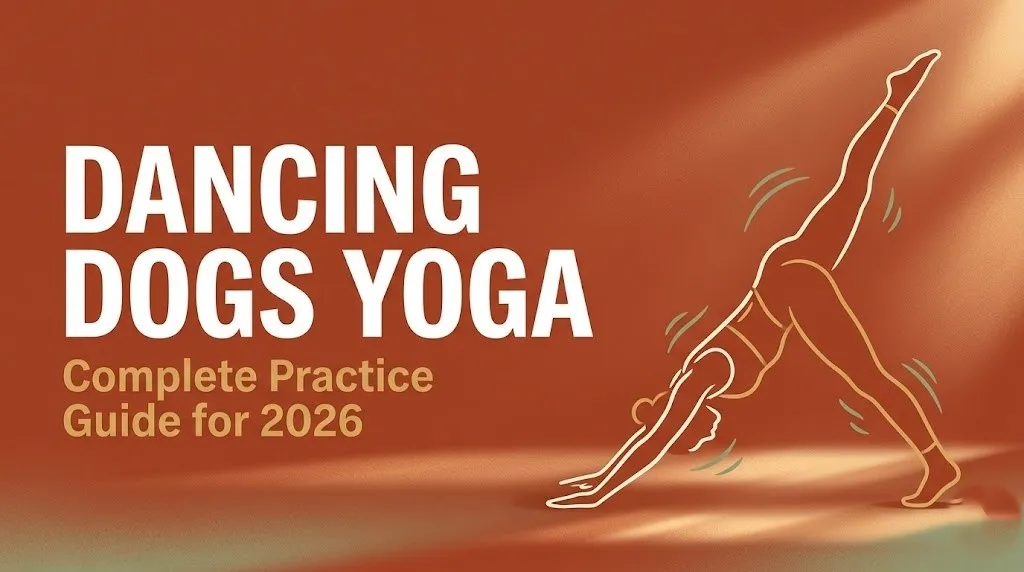
Dancing dogs yoga is a dynamic, movement-based variation of Adho Mukha Svanasana (Downward-Facing Dog) where the practitioner adds rhythmic heel pedaling, hip sways, and spinal undulation instead of holding the pose statically. It is one of the most accessible ways to build spinal mobility, hip flexibility, and shoulder stability all at once.
This style of movement matters because static stretching alone does not address the full range of what tight, compressed bodies need. According to the National Center for Complementary and Integrative Health (NCCIH), yoga that incorporates dynamic movement alongside static holds produces broader improvements in joint range of motion and muscular coordination than static practice alone.
This guide explains exactly what dancing dogs yoga is, how to do it with correct alignment, what it does for your body at the muscular and joint level, who benefits most, and how to modify it safely for beginners, seniors, and anyone managing wrist or back concerns.
What Is Dancing Dogs Yoga?
Dancing dogs yoga is a dynamic yoga practice built around flowing, rhythmic movement within and around the Downward-Facing Dog position, rather than holding the pose in stillness.
The term “dancing dogs” describes the quality of movement that emerges when a practitioner actively explores the Downward Dog shape. Instead of finding a fixed position and breathing through it, the practitioner pedals the heels alternately, sways the hips side to side, waves through the spine, or pulses through transitions that move the body in and out of the base shape.
This is not a separate, formally codified yoga style with a single founder or unified curriculum. It is a movement approach that appears across Vinyasa, Hatha, and flow-based classes, often used as a warm-up tool, a creative interlude in a sequence, or a standalone dynamic practice for spinal and hip mobility.
| What It Is | What It Is Not |
|---|---|
| A dynamic variation of Downward Dog | A separate named yoga style like Ashtanga or Iyengar |
| A movement approach used across multiple yoga styles | A fixed pose with one correct form |
| An accessible warm-up and mobility tool | A fitness program or aerobic workout |
| A practice suitable for most experience levels | An advanced inversion or strength-focused technique |
The practice draws on the foundational biomechanics of Adho Mukha Svanasana while adding the neuromuscular benefits of dynamic movement: improved proprioception, increased synovial fluid circulation in the joints, and greater muscular coordination across the posterior chain.
Modification note: For anyone unfamiliar with Downward Dog, starting in a modified version with knees bent or hands on a wall is the appropriate entry point before introducing any dancing movements.
Dancing Dog Pose: The Yoga Movement Explained
The dancing dog pose refers to the dynamic, exploratory movement performed within the structural framework of Adho Mukha Svanasana (Downward-Facing Dog). The pose itself creates an inverted V-shape with the hips at the apex, and the dancing variations introduce controlled mobility work within that shape.
The base position of Adho Mukha Svanasana requires the hands to be shoulder-width apart, fingers spread, with weight distributed evenly across the entire palm and all ten fingers. The feet are hip-width apart. The hips rise toward the ceiling as the spine lengthens. The head is between the upper arms, not hanging passively.
From that base, the dancing dog movement introduces three primary actions:
- Heel pedaling: Alternately bending one knee while pressing the opposite heel toward the floor. This dynamically stretches the gastrocnemius and soleus on the extended leg while gently loading the hip flexor of the bent-knee side.
- Hip sway: Shifting the hips slowly from side to side in a lateral arc. This engages the gluteus medius, tensor fasciae latae, and lateral hip rotators in a controlled, active way.
- Spinal wave: Initiating movement from the tailbone that ripples up through the lumbar, thoracic, and cervical spine in a fluid undulating pattern. This is the most advanced of the three movements and requires a baseline of spinal mobility.
Modification note: Beginners or anyone with wrist sensitivity can perform heel pedaling and hip swaying with knees bent throughout, which reduces the load on the wrist joints and hamstrings while preserving the benefit of the dynamic movement.
How to Do Dancing Dogs Yoga Step by Step
Dancing dogs yoga is practiced by building the Downward Dog base position first, then layering in dynamic movements systematically and with breath coordination.
Starting correctly matters because the dancing movements amplify both the benefits and the risks of whatever alignment is already present. A well-set base makes everything that follows safer and more effective.
To practice dancing dogs yoga:
- Begin on hands and knees in a tabletop position. Stack wrists directly under shoulders and knees under hips.
- Spread all ten fingers wide. Press through the base of the index finger and thumb to distribute weight away from the wrist center.
- Tuck toes under. Exhale and press the hips up and back to form an inverted V-shape.
- Keep a slight bend in the knees if the hamstrings are tight. A long spine matters more than straight legs.
- Relax the head between the upper arms. The ears align between the biceps, not below them.
- Hold the base shape for 3 to 5 breath cycles before adding any movement.
- Begin heel pedaling: inhale to neutral, exhale to press one heel down and bend the opposite knee. Alternate slowly with each breath.
- After 4 to 6 rounds, add hip swaying: shift the hips gently to the right and then to the left. Move with the breath, not against it.
- If a spinal wave feels available, initiate from the tailbone: curl the tailbone slightly under on an exhale, then extend it back on the inhale, letting the wave travel up through the spine.
- After 8 to 10 breath cycles of dancing movement, lower into Balasana (Child’s Pose) to rest.
Modification note: Anyone with carpal tunnel syndrome or wrist pain should place a folded blanket or yoga wedge under the heel of the palm to reduce wrist extension angle. Alternatively, perform the entire sequence on forearms (Dolphin Pose variation) to eliminate wrist loading completely.
Key Takeaway: Dancing dogs yoga is Downward Dog made dynamic. Set the base first, add heel pedaling second, then hip sways, then spinal waves. Layering in that order protects both the wrists and the spine.
Muscles and Joints Engaged in Dancing Dog Yoga
Dancing dogs yoga engages a broader range of muscles than static Downward Dog because the dynamic movements recruit additional stabilizing and mobilizing muscle groups throughout the movement.
The posterior chain does the primary work in the base position. The hamstrings lengthen under load. The gastrocnemius and soleus are stretched dynamically during heel pedaling, which provides a more neurologically engaging calf stretch than a static hold achieves. The erector spinae and multifidus activate to maintain spinal length against gravity during hip sways and spinal undulation.
The shoulder girdle is loaded isometrically throughout. The serratus anterior is the key stabilizer, preventing the shoulder blades from winging away from the ribcage. The rotator cuff (supraspinatus, infraspinatus, teres minor, subscapularis) co-contracts to stabilize the glenohumeral joint under body weight.
| Movement | Primary Muscles Engaged | Joints Involved |
|---|---|---|
| Base Downward Dog | Hamstrings, calves, serratus anterior, triceps | Hip, knee, ankle, shoulder, wrist |
| Heel pedaling | Gastrocnemius, soleus, hip flexors alternately | Knee, ankle, hip |
| Hip sway | Gluteus medius, tensor fasciae latae, lateral hip rotators | Hip, lumbar spine |
| Spinal wave | Erector spinae, multifidus, rhomboids, cervical extensors | Lumbar, thoracic, cervical spine |
The wrist joints bear a meaningful portion of body weight throughout. Proper finger spreading and forearm engagement reduce the compressive load on the carpal bones, which is why hand placement is addressed before any dynamic movement begins.
Dancing Dogs Yoga Benefits for the Spine and Hips
Dancing dogs yoga builds spinal mobility and hip flexibility through dynamic, repetitive movement across the full range available to these structures, which is more effective for functional mobility than static stretching alone.
The spinal benefits are particularly relevant for people who spend extended time sitting. Think of a spine that has been compressed in a fixed seated position for eight hours as a garden hose that has been kinked: the dancing dog’s spinal wave is the action that methodically unkinks it, segment by segment, from the lumbar base to the cervical top.
Research published in the Journal of Bodywork and Movement Therapies found that dynamic yoga-based spinal movement interventions produced measurable improvements in lumbar range of motion and reduced self-reported stiffness in participants with sedentary occupations after a 6-week practice period.
Hip benefits include:
- Improved hip flexor length: The hip sway component creates alternating hip flexor lengthening that static poses do not replicate in the same rhythmic pattern
- Greater gluteus medius activation: The lateral sway recruits the gluteus medius, which is consistently underactivated in people with prolonged sitting habits and contributes to lower back instability when weak
- Increased synovial fluid distribution: Dynamic movement at the hip joint circulates synovial fluid more effectively than static holds, which supports cartilage health over time
- Improved sacroiliac joint mobility: The gentle, rhythmic hip movement provides controlled mobilization of the sacroiliac joint, which is frequently restricted in people with chronic lower back tension
Modification note: Anyone with acute sacroiliac joint pain should limit hip swaying range to a very small arc and avoid any movement that provokes sharp or radiating pain. A physical therapist familiar with both yoga and sacroiliac dysfunction can help establish a safe range.
Dancing Dog Yoga for Beginners: Modifications and Starting Points
Beginners can practice dancing dogs yoga safely by starting with a bent-knee Downward Dog and introducing only heel pedaling in the first two weeks before adding hip sways or spinal waves.
The most common beginner mistake is copying the most flexible version of the pose seen on screen. Forcing straight legs before the hamstrings are ready compresses the lumbar spine into flexion, which defeats the purpose of the movement and creates the very back tension the practice is meant to address.
Beginners benefit from three specific setup modifications:
- Bend the knees generously: A bent-knee Downward Dog with a long, flat back is biomechanically superior to a straight-leg version with a rounded spine. Straight legs become available as hamstring flexibility develops.
- Use two yoga blocks under the hands: Raising hand height by 4 to 9 inches reduces the angle of wrist extension, decreases the load on tight shoulder muscles, and makes the pose accessible for practitioners with limited upper body flexibility.
- Start with slower heel pedaling: Move one heel at a time, hold for 2 to 3 breaths, then switch. This deliberate tempo builds the neuromuscular familiarity the joints need before adding more fluid, music-driven movement.
Quick Summary for Beginners:
- Start with knees bent throughout the entire practice for the first 2 to 4 weeks
- Place hands on two blocks if wrists or shoulders protest
- Practice heel pedaling only before adding hip sways
- Rest in Balasana (Child’s Pose) after every 8 to 10 breaths of active movement
Key Takeaway: Beginners who start with a bent-knee base, blocks under the hands, and heel pedaling only will build the foundation for full dancing dog practice far faster than those who force straight legs from day one.
Dancing Dog Yoga for Wrists: Safety and Modifications
Wrist health is the most common safety concern in dancing dogs yoga, because the base Adho Mukha Svanasana position places body weight through extended wrist joints for sustained periods.
The wrist joint is a complex structure involving the radiocarpal joint, the eight carpal bones, and multiple ligaments and tendons. In Downward Dog, the wrist is in approximately 60 to 90 degrees of extension under partial body weight load, depending on the practitioner’s body proportions and the distance of their hand placement from the feet. This is manageable for most people with healthy wrists, but it creates real risk for those with carpal tunnel syndrome, previous wrist fractures, or repetitive strain injuries.
Wrist protection strategies for dancing dogs yoga:
- Spread all ten fingers: More contact with the mat means more distributed load. Think of pressing through every finger pad, not just the heel of the hand.
- Engage the forearms: Externally rotating the upper arms while pressing the fingertips down creates a co-contraction in the forearm muscles that actively supports the wrist joint.
- Use a yoga wedge or rolled mat: A wedge reduces wrist extension angle to approximately 30 to 45 degrees, which falls within a more neutral range for most practitioners.
- Practice on forearms (Dolphin Pose base): Performing all dancing dog movements from forearms instead of hands eliminates wrist extension entirely while preserving every hip, spine, and calf benefit.
- Place a folded blanket under the heel of the palm: This raises the wrist base and reduces the severity of extension without requiring additional equipment.
Safety note: Anyone who has been diagnosed with carpal tunnel syndrome, recently fractured the radius or ulna, or has active wrist inflammation should start with the forearm variation and only progress to hand-based practice with guidance from a physical therapist or certified yoga therapist.
Dancing Dogs Yoga for Seniors and Limited Mobility
Seniors and practitioners with limited mobility can access all the core benefits of dancing dogs yoga through a standing wall version or a chair-supported variation that eliminates floor-based weight-bearing entirely.
The standard Downward Dog position, even modified, presents a barrier for seniors with shoulder impingement, wrist arthritis, osteoporosis of the upper extremities, or difficulty transitioning to and from the floor. The standing wall adaptation removes every one of these barriers while preserving the hip sway, calf stretch, and spinal mobility benefits.
The American College of Sports Medicine recommends that adults over 65 include flexibility and balance training at least two days per week. Dancing dog variations in an accessible format directly address both goals simultaneously, making them a time-efficient choice for senior practitioners.
To practice the standing wall variation:
- Stand facing a wall, approximately arm’s length away
- Place hands on the wall at shoulder height with fingers spread wide
- Walk the feet back until the body forms an L-shape with the hips at the apex
- Gently pedal one heel at a time, bending the opposite knee slowly
- Add small lateral hip sways once the heel pedaling feels comfortable
- Hold each movement for 2 to 3 breath cycles before switching
Chair modification: Sit tall in a sturdy chair. Place hands on the thighs or armrests. Gently undulate the spine from the tailbone upward, inhaling to arch and exhaling to round. This seated spinal wave captures the lumbar and thoracic mobility benefit of the floor spinal wave without any weight-bearing on wrists or shoulders.
Safety note for seniors with osteoporosis: Avoid the deep spinal flexion component of the spinal wave. Work only in the extension and neutral range, which is safe and beneficial for bone health without the compression risk that forceful spinal flexion creates.
Dancing Dog Yoga for Back Pain and Tight Hamstrings
Dancing dogs yoga is one of the most appropriate dynamic yoga practices for people managing chronic lower back tension and tight hamstrings, provided the practice is adapted to avoid aggravating these conditions.
The connection between hamstring tightness and lower back pain is well-documented. According to a review published in the Journal of Alternative and Complementary Medicine, restricted hamstring flexibility is associated with increased posterior pelvic tilt and reduced lumbar lordosis, which places the lumbar discs in a vulnerable position during daily activities like sitting and forward bending. The dancing dog’s dynamic calf and hamstring stretch addresses the posterior chain tightness that contributes to this pattern.
For back pain, the key is keeping the knees bent throughout the practice. A bent-knee dancing dog allows the pelvis to tilt anteriorly (forward), which restores lumbar curve and removes the disc compression that a straight-leg version with a flat or rounded back creates for practitioners with limited hamstring flexibility.
What to do for back pain in dancing dogs yoga:
- Maintain a generous knee bend throughout, regardless of your overall flexibility
- Keep heel pedaling small and controlled; avoid forceful pressing that yanks the hamstring
- Limit hip sway to a small arc; large sways increase lateral lumbar loading
- Avoid spinal waves during acute back pain flares; restore this movement only after the acute phase passes
- Rest in Balasana (Child’s Pose) with a bolster under the torso between rounds if lower back fatigue develops
Modification note: People with lumbar disc herniation should avoid any yoga pose that increases posterior disc pressure. If heel pedaling in Downward Dog creates pain radiating into a leg, stopping immediately and consulting a physical therapist who works with yoga students is the appropriate next step.
Key Takeaway: For back pain and tight hamstrings, the single most protective adaptation is keeping the knees generously bent throughout every version of dancing dogs yoga, which lets the pelvis tip forward and restores the lumbar curve that the movement is designed to support.
Dancing Dog Yoga and Breathwork: How to Coordinate Movement and Breath
Coordinating breath with the dancing dog movement is what separates this practice from simple physical exercise and gives it the nervous system regulation benefits that yoga uniquely offers.
The standard breath-movement pairing in dancing dogs yoga follows the same principle as Vinyasa yoga: the body moves on the breath, not between breaths. Specifically, the inhale creates length and expansion, while the exhale deepens movement or releases tension. This is not arbitrary. Exhaling during effort or release engages the parasympathetic nervous system, which reduces heart rate and cortisol output during practice.
Breath-movement coordination guide:
| Movement | Breath Phase | What Happens in the Body |
|---|---|---|
| Press heel to floor (heel pedal) | Exhale | Calf and hamstring lengthen under relaxed diaphragm |
| Return to neutral leg position | Inhale | Leg muscles reset, diaphragm expands downward |
| Hip sway to one side | Exhale | Lateral hip muscles release into the movement |
| Return to center | Inhale | Core and spine re-stack |
| Spinal extension wave (tailbone back) | Inhale | Chest and thoracic spine open with the breath |
| Spinal flexion wave (tailbone under) | Exhale | Abdominals engage naturally with the exhalation |
Ujjayi pranayama (victorious breath), the soft, ocean-sound breath created by a partial glottis constriction, is the most commonly paired breath technique for dancing dog practice. It naturally slows the breathing rate to approximately 4 to 6 breaths per minute, which research published in the International Journal of Yoga has associated with increased heart rate variability and reduced sympathetic nervous system activation.
Modification note: Beginners who find ujjayi breath coordination distracting should simply breathe naturally through the nose without controlling the sound. Natural nasal breathing still carries most of the parasympathetic benefit without the cognitive load of adding a new technique simultaneously.
Dancing Dog Yoga Variations and Progressions
Once the basic dancing dog movements are comfortable, several progressions build greater strength, balance, and spinal mobility while maintaining the dynamic, rhythmic character of the practice.
Each variation adds a new demand on either the posterior chain, the shoulder girdle, or the core stabilizers, which makes dancing dog yoga a scalable practice from beginner to experienced levels.
Standard to advanced progressions:
| Variation | How It Differs | Who It Is For |
|---|---|---|
| Bent-knee heel pedaling | Reduced hamstring demand, lower wrist load | Beginners, seniors, people with tight hamstrings |
| Straight-leg heel pedaling | Full posterior chain lengthening | Intermediate practitioners |
| Hip sway with spinal wave | Adds thoracic and cervical mobility | Intermediate to advanced |
| One-leg dancing dog | Raises one leg while pedaling the standing heel | Advanced practitioners, hip and balance work |
| Forearm dancing dog (Dolphin variation) | Shifts load from wrists to forearms | Wrist injuries, shoulder strength building |
| Slow-flow transition: Dog to Plank pedal | Links Downward Dog to Phalakasana (Plank Pose) | Core strength and flow sequencing |
| Dog to Low Lunge step-through | Transitions into Anjaneyasana (Low Lunge) from dancing dog | Hip flexor opening, Vinyasa flow building |
Safety note on one-leg dancing dog: Raising one leg while the standing heel is in motion creates significant demand on the gluteus medius and the standing leg’s balance structures. Practitioners with current hip labral tears, recent hip surgery, or significant balance impairment should skip this variation until cleared by a physical therapist.
Dancing Dogs Yoga as a Warm-Up Sequence
Dancing dogs yoga functions as one of the most effective yoga warm-up tools available because it addresses the hip flexors, posterior chain, shoulder girdle, and spine within a single, continuous movement format.
A warm-up serves a specific physiological purpose: gradually increasing tissue temperature, circulation, and joint lubrication before the body is asked to perform more demanding movements. Dynamic movement achieves this more effectively than static stretching as a warm-up because it increases blood flow to active muscles while maintaining movement-based neural activation.
A 5-minute dancing dogs warm-up sequence before any yoga class or home practice:
- Begin in tabletop. Take 3 rounds of Marjaryasana-Bitilasana (Cat-Cow Pose) to warm the spine
- Press up to Downward Dog. Hold for 3 breaths with bent knees
- Begin slow heel pedaling for 6 to 8 breath cycles
- Add gentle hip sways for 4 to 6 breath cycles
- Rest in Balasana (Child’s Pose) for 3 breaths
- Return to Downward Dog. Add a spinal wave if it feels available
- Walk the feet toward the hands and roll up to standing through Uttanasana (Standing Forward Fold)
This sequence mobilizes the entire posterior chain and spine before the practitioner attempts any standing poses, deep hip openers, or backbends. Teachers and physical therapists working with movement-based practices generally recommend that dynamic warm-up movements precede static holds for this reason.
Modification note: Seniors or anyone who cannot safely come to the floor can use the standing wall version of dancing dog described earlier as a complete warm-up alternative.
Key Takeaway: Used as a 5-minute warm-up, dancing dogs yoga mobilizes the spine, posterior chain, and hips more effectively than a static Downward Dog hold, because movement circulates synovial fluid and increases tissue temperature in a way that stillness does not.
Dancing Dogs Yoga With Music: How Rhythm Changes the Practice
Adding music to dancing dogs yoga changes the practice meaningfully by providing an external rhythm that guides the pace of movement, reduces the mental effort of self-directing breath timing, and increases enjoyment, which research connects directly to practice adherence.
The movement naturally lends itself to rhythmic accompaniment because heel pedaling, hip sways, and spinal waves all have a wave-like tempo that aligns with musical pulse. When the music’s beat matches the practitioner’s natural breath rate, the body often settles into the movement more fully than it does with cognitive breath-counting alone.
A study published in the Journal of Alternative and Complementary Medicine found that music-accompanied yoga practice increased participant-rated enjoyment scores and reduced perceived effort compared to silent practice, without changing the physiological parameters of the session. This is relevant because higher enjoyment correlates with greater frequency of practice over time.
Practical music guidance for dancing dogs yoga:
- Tempo: Songs at 60 to 80 beats per minute align naturally with a slow, controlled yoga breath rate
- Genre: Ambient, chill electronic, acoustic, or world music without jarring tempo changes work well
- Avoid: High-tempo tracks over 120 BPM, which accelerate movement beyond safe joint control for most practitioners
- Volume: Low to moderate. Music that competes with the ability to hear your own breath defeats the purpose of breath-movement coordination
Modification note: Some practitioners, particularly those with sensory sensitivities or those who are very new to yoga, find music distracting rather than supportive. Silence is always a valid choice. The body does not need musical accompaniment to benefit from dancing dog movement.
What the Research Says About Dynamic Yoga Movement
Dynamic yoga movement, of which dancing dogs yoga is a specific application, is supported by a growing body of research showing benefits for spinal mobility, joint health, stress regulation, and functional flexibility that differ from the benefits of static yoga practice alone.
The distinction between static and dynamic yoga is not about which is better overall. It is about what each does differently. Static holds develop passive flexibility and sustained muscular endurance. Dynamic movement, also called vinyasa in its broadest application, develops active flexibility, neuromuscular coordination, and joint lubrication through movement-generated synovial fluid circulation.
According to the National Center for Complementary and Integrative Health (NCCIH), yoga practices that include both dynamic and static components show the broadest range of health benefits across populations, including improvements in balance, flexibility, pain management, and anxiety reduction.
Research published in Complementary Therapies in Medicine documented that a 12-week dynamic yoga intervention produced measurable improvements in lumbar range of motion, hamstring flexibility, and self-reported wellbeing in adults with sedentary occupations. The dynamic movement component was identified as a key contributor to the lumbar mobility outcomes.
What this means for dancing dogs yoga practice:
- Three sessions per week appears to be the minimum effective dose based on yoga research patterns
- Sessions of 15 to 20 minutes of focused dancing dog movement produce mobility and nervous system benefits
- Combining dancing dog warm-up with static pose holds afterward addresses both active and passive flexibility
- Consistency over time matters more than session duration for cumulative joint mobility gains
The Yoga Alliance notes that dynamic movement sequences used within yoga classes have shown particular effectiveness for populations managing chronic tension patterns from sedentary work habits.
Frequently Asked Questions About Dancing Dogs Yoga
What exactly is dancing dogs yoga and is it a real yoga style?
Dancing dogs yoga is a dynamic movement practice built around Adho Mukha Svanasana (Downward-Facing Dog) where the practitioner adds heel pedaling, hip sways, and spinal waves instead of holding the pose statically.
It is not a formally codified yoga style with a single founder or standardized curriculum, but it is a widely taught movement approach that appears across Vinyasa, Hatha, and flow-based yoga classes.
The term describes the quality of movement rather than a specific school or lineage.
How is dancing dog yoga different from regular Downward Dog?
Regular Downward Dog is a static pose held for several breaths in a fixed position, while dancing dog adds continuous rhythmic movement within and around that same shape.
The dynamic version engages additional muscles including the gluteus medius, lateral hip rotators, and spinal extensors in a way that the static version does not.
Both share the same wrist, shoulder, and hamstring demands, so all the same alignment principles and safety precautions apply.
Is dancing dog yoga good for back pain?
Dancing dogs yoga can be helpful for chronic lower back tension when practiced with bent knees and small, controlled movements, but it requires modification and should be avoided during acute pain flares.
The dynamic calf and hamstring stretch addresses the posterior chain tightness that contributes to lower back strain, and the hip sway provides gentle sacroiliac joint mobilization.
Anyone experiencing pain that radiates into a leg during this practice should stop and seek evaluation from a physical therapist before continuing.
Can beginners do dancing dogs yoga?
Yes. Beginners can practice dancing dogs yoga safely by using a bent-knee base, placing hands on two yoga blocks, and starting with heel pedaling only before adding hip sways or spinal waves.
The key is building the base position correctly first, then adding dynamic movements one at a time in the sequence described in the step-by-step instructions above.
Most beginners can participate in a basic version of dancing dogs yoga within their first or second yoga class.
How long should I hold the dancing dog movement?
There is no static hold in dancing dogs yoga because the practice is based on continuous movement rather than held positions.
Most teachers recommend practicing the full sequence of heel pedaling, hip sways, and spinal waves for 8 to 12 breath cycles before resting in Balasana (Child’s Pose).
Two to three rounds of this movement pattern in a session is a practical starting point, with duration increasing as strength and familiarity build.
Step Onto the Mat and Start Moving
The fastest way to understand dancing dogs yoga is to try one round of heel pedaling right now. Set up a Downward Dog with bent knees, spread your fingers wide, and simply begin pressing one heel down at a time. That is the whole entry point.
From there, add a hip sway on your next practice day. Add the spinal wave the week after. Give your body time to learn each layer before stacking the next.
Three sessions per week for four weeks will give you a clear sense of what this practice does for your spine, hips, and overall movement quality. Let the body tell you what it needs next.